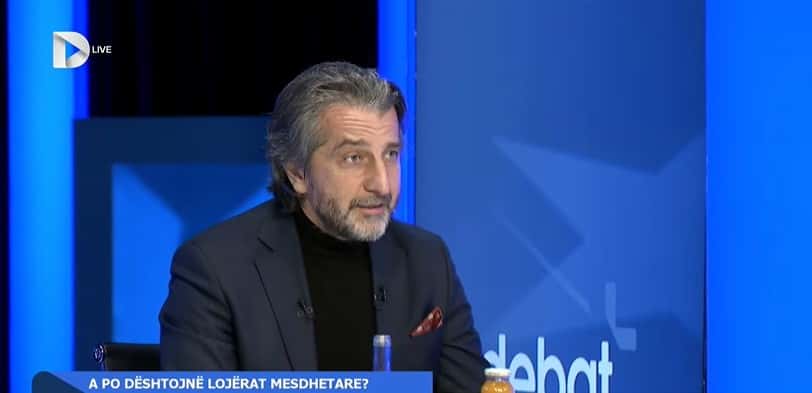
German Foreign Policy Association scholar ( DGAP, Nikola Xavieref, has declared youth protests in Albania are challenging not only the government of Edi Rama but also the traditional political elite.
According to him, the European Union should use its influence to promote dialogue between the government and protesters, otherwise risk losing credibility to Albanian citizens.

In the interview for Deutsche Welle, Xavieref estimates that the protest movement expresses widespread dissatisfaction with the political system, while the lack of clear political leadership remains one of its characteristics.
According to him, like other protest movements in Europe, this movement can also increase pressure on power and spur parties seeking political change.
The expert stresses that the protests question Prime Minister Edi Rama’s power, adding that the government should show readiness for dialogue and give more space to the participation of civil society.
Commenting on Rama’s statements that the protests could jeopardise Albania’s membership in the European Union, Xavieref opposes the argument, the Telegraph broadcast.
According to him, the protests highlight the gap between the legal reforms Albania undertakes to approach EU standards and concrete changes in the functioning of institutions.
He estimates that students can ask Brussels to exercise its influence on the Albanian government so that citizens’ concerns can be taken seriously.
The claim that protests endanger the process of European integration is a political phrase without restraint is Xavieref’s stance in the Deutsche Welle interview.
According to the expert, the fact that Albania aims at EU membership should serve as additional reasons for respecting democratic standards and for the involvement of citizens in decision-making processes.
Another issue addressed in the interview is the discontent of some of the protesters over the European Union’s stance towards the Albanian government.
Xavieref stresses that Albanians generally continue to have a positive attitude towards the EU and link European integration with rule of law, good governance, transparency, media freedom and democratic standards.
According to him, however, young people expect the European Union to use its influence to support reform and institutional accountability requirements.
If this does not happen, the EU risks losing credibility, the researcher warns.
He adds that, in the short term, dissatisfaction with Brussels’ position is not expected to question the Albanians’ overall support for membership in the European Union.
According to Xavieref, the European Union can address students’ concerns in the annual enlargement report and stress that peaceful protests are part of a democratic debate.
He suggests that Brussels ask the government in Tirana to take seriously the protestors’ demands, linking them to standards and negotiations chapters for membership.
Meanwhile, Germany could play a role through the Berlin Process, calling on the Albanian political leadership to contribute to lowering tensions, maintain calm and show restraint.
Deutsche Welle’s interview highlights that the movement of youth in Albania should not only be seen as opposition to the current government, but also as an expression of dissatisfaction with the traditional political integrity.
According to DGAP expert, the way the European government and institutions would respond to these requirements could affect citizens’ confidence in democracy and the European integration process. /Telegraphy/