
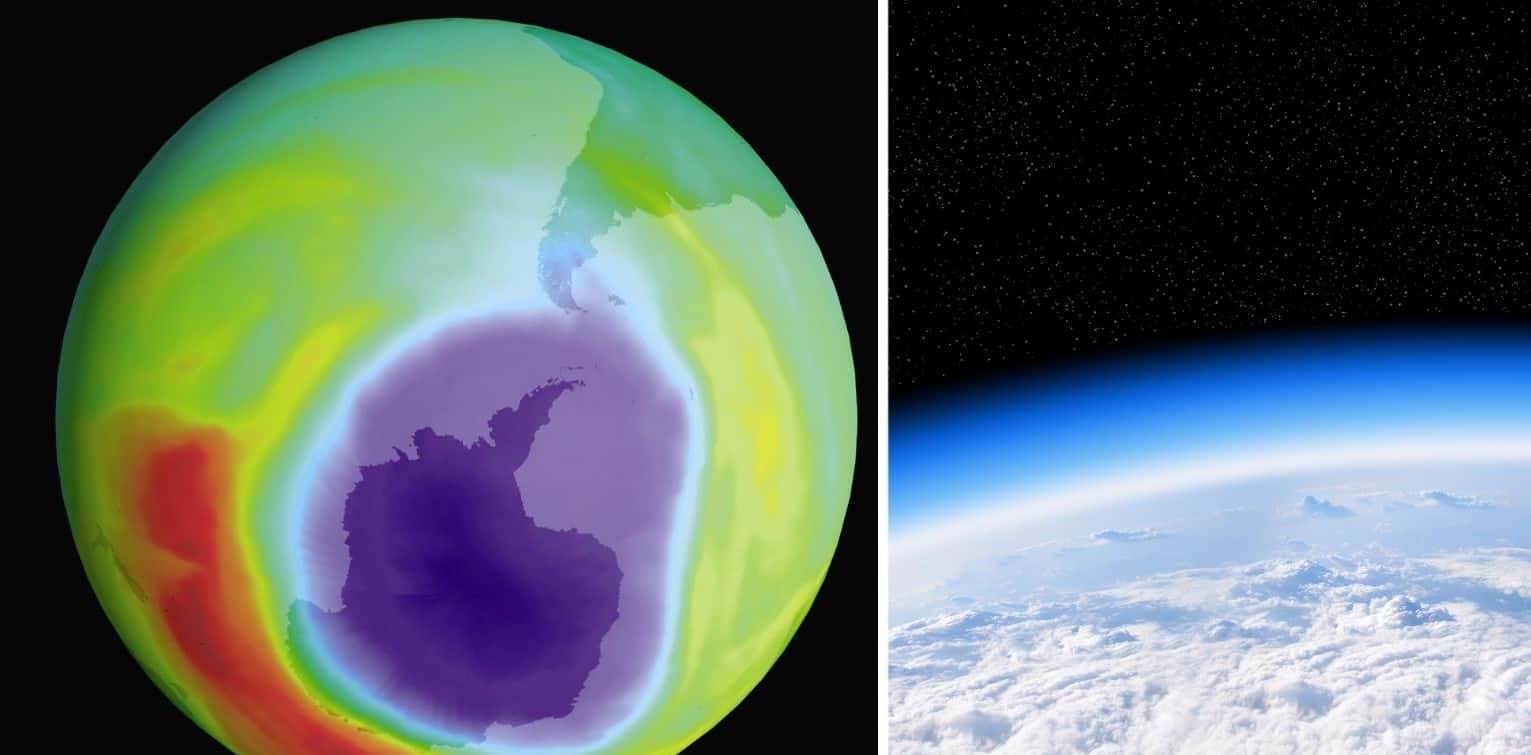
The ozone hole over Antarctica has expanded dramatically during 2026, reaching its peak of 271 million square miles [27.1 million sq km] – nearly three times the United States’ territory.
According to a report released on November 4th by NASA and the National Oceanic and Atmospheric Administration ( NOAAA), this is the largest area hole registered over the last decade and the seventh largest in 48 years of monitoring.

Measures show that on September 18, 2026, the earth’s lower concentration area reached a peak of 271 million square miles [27.1 million sq km]. The average area during September 7th, October 13, was about 25 million square miles [25 million sq km].
Scientists explain that the main cause of this expansion was an extremely powerful polar vortex that kept the cold air focused on Antarctica and created more favorable conditions for the destruction of the ozone in the stratosphere.
Amy Butler, a scientist at NOAAA, has explained that the atmospheric systems that usually help weaken the polar vortex were particularly weak during August and September. As a result, chemical processes that damage the ozone layer developed in a space larger than usual.
However, experts stress that the hole’s large size this year does not mean that the long-term process of recovery of the ozone layer has deteriorated.
Paul Newman, scientist of NASA, has estimated that this year’s hole would have been even bigger, for about 2.6 million to 5.2 million square miles, if the substances that destroy the ozone were still at the level of 2000.
An important role in gradual improvement of the situation has been played by the Montreal Protocol, the 1987 international agreement on limiting substances that damage the ozone layer. According to NOAA, the concentration of chloride in the memberic stratosphere has decreased by about a third from the peak levels of the past.
The ozone layer protects life on earth by absorbing much of the harmful ultraviolet radiation of the sun. Halling can increase the risk of skin cancer, eye injury, and effect on ecosystems.
NASA and NOAA estimate that the ozone layer over Antarctica can be restored to historical levels during the 1920 ‘ s. Until then, the size of the hole can continue to vary from year to year, depending on temperature and weather conditions.
The signal where the truth speaks before the news!
Source Layer: Signal


