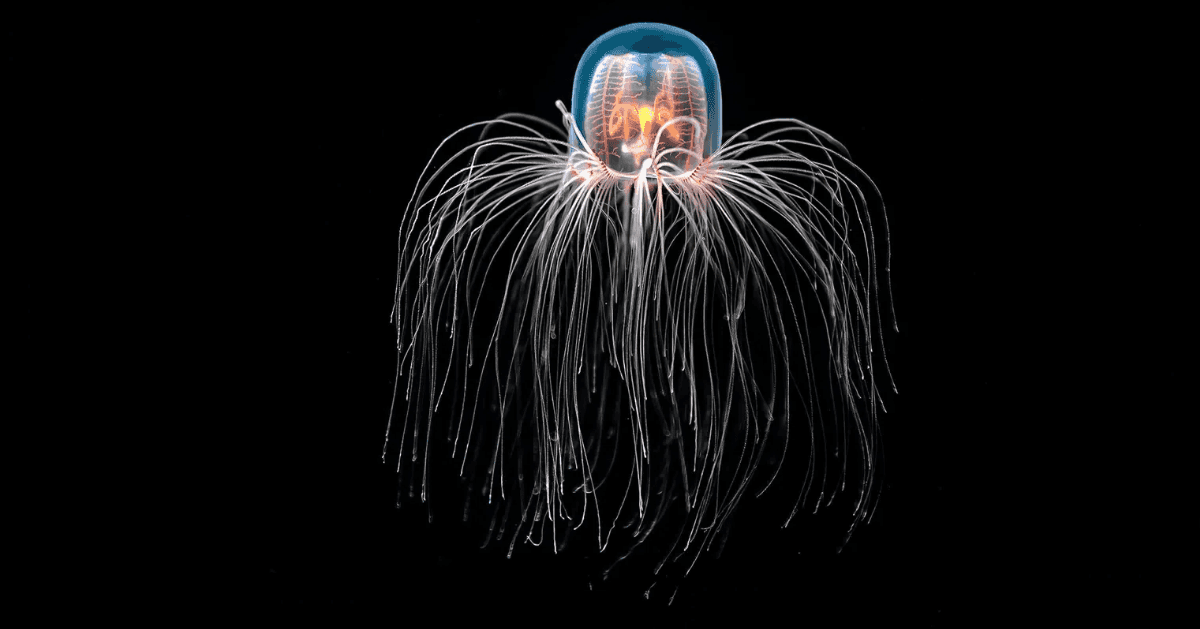
A small sea creature is drawing the attention of scientists worldwide because of a remarkable ability: the opportunity to return to an earlier stage of life and to restart the cycle of development.
It’s about the jellyfish. Turritopsis dohrini, known as the immortal canon, which has a biological mechanism that enables it to return to an early stage when damaged or faced difficult environmental conditions.

This process, known as transdiference, enables some mature cells to change function and transform into other types of cells. The lamp can thus be restored to an early developmental structure from which it can be formed again.
This particular skill has prompted the interest of researchers from the United States, Italy and Spain, who are trying to discover genetic mechanisms behind this phenomenon.
A study published in 2022 found that this species has more copies of several genes related to DNA repair and the maintenance of telomeries, protective structures at the ends of chromosomes, which are usually cut short over age.
Scientists hope that understanding these mechanisms can help develop new treatments for tissue injuries, recovery after strokes, and heart attacks, as well as aging diseases, including Alzheimer’s.
However, researchers point out that the use of these mechanisms in human medicine is still far away. The objective is, not to turn the human body into an earlier phase of life, but to understand how cells can be restored and restored to lost functions.
Despite the name, the immortal lamp is not immune. It may die from predator attacks, food shortages, or changes in the marine environment. And not all individuals of this species manage to realise the restoration process.
However, this little creature can hold important keys to better understanding aging and regeneration of cells, opening up new prospects for future medicine.
The signal where the truth speaks before the news!
Source Layer: Signal