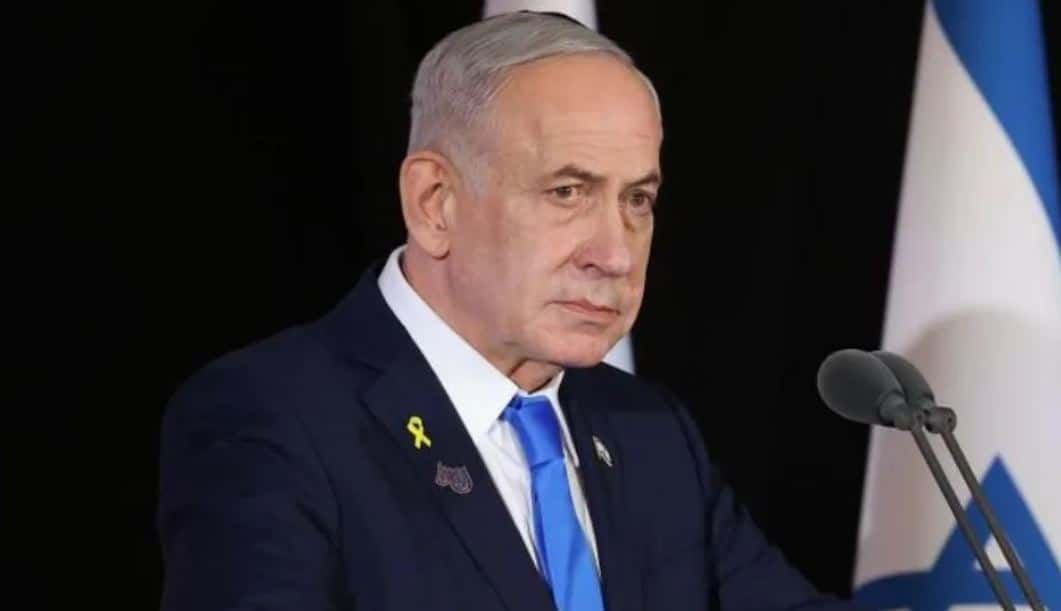
Israeli Prime Minister Benjamin Netanyahu, and his rival, Gadi Eisencott, have expressed contrasting claims about Israel’s leadership following Tuesday’s elections, which, according to preliminary results, have not produced a clear winner.
Netanyahu has called for forming a strong right-wing government, while Eisenkot has declared voters have rejected the continuation of the current prime minister’s mandate, Reuters writes, broadcast Dukaagjini.

Israel’s Central Election Committee has continued to count votes Wednesday, while final results are expected to become known Thursday. These are the first elections since the Hamas-led attack on October 7, 2023.
With about 48.4 per cent of the votes counted, Netanyah’s bloc was expected to secure 55 seats in Knesset, while the Eisenkot 50 bloc. Arab parties were expected to win 15 seats, according to Israeli media. However, these figures may vary with the continuation of the count.
To secure the parliamentary majority in the 120-seat Assembly, at least 61 seats are needed. So far, none of the two blocs have reached this threshold, and neither Netanyahu nor Eisencos have declared victory.
The preliminary results present a possible obstacle to Netanyah and his nationalist-religious coalition. However, the political stalemate could enable him to continue his task as acting prime minister during the government formation negotiations, which could last weeks or months, or even until the new elections are held.
Netanyah’s bloc has ruled out the possibility of forming government with Arab parties, which during the campaign have demanded his and his far-right allies’ departure. Even Eisencott, party leader Yashar and former Israeli Army chief, has almost ruled out such an agreement, making his way to power difficult.
Meanwhile, far-right religious parties, led by Itamar Ben-Gvir and Bezale Smotrich, were expected to secure a total of 13 seats within the Netanyah bloc.
Addressing his supporters at Likud party headquarters in Jerusalem after 3: 00 a.m., Netanyah called for the formation of a strong right-wing government. He also praised Israel’s military successes and cited the possibility of joint actions with US President Donald Trump against Iran.
Isral Faces a permanent historical opportunity, together with our partner President Trump, to restore the existing threat to Iran once and for all. But lower motivations must not divide us from this amount of mission, Netanyah said.
Trump, who had voiced support for Netanyah, commented on the results Wednesday, saying the Israeli prime minister had performed well in the elections.
On the other hand, Eisenkot said that citizens have voted against the continuation of Netanyah at the head of the government and urged him to withdraw from politics.
Netaniyaah is a Caretaker prime minister, without a mandate or the people’s trust, Eisencott said, calling on security institutions not to allow political interests to be placed on Israel’s security.
Voter turnout was 77.7 percent, according to the Central Elections Committee, the highest level in more than two decades and about seven percentage points compared to the 2022 elections.
Israel’s fragmented political system gives smaller parties a crucial role in negotiations on forming coalitions. If none of the blocs manage to form the government, the country can go back to the elections, the possibility Eisencot has rejected, referring to the high citizens’ participation.
Following the publication of preliminary results and the lack of a clear winner, Israeli currency, Shekel, marked a slight weakening.
Source Layer: Dukeagini