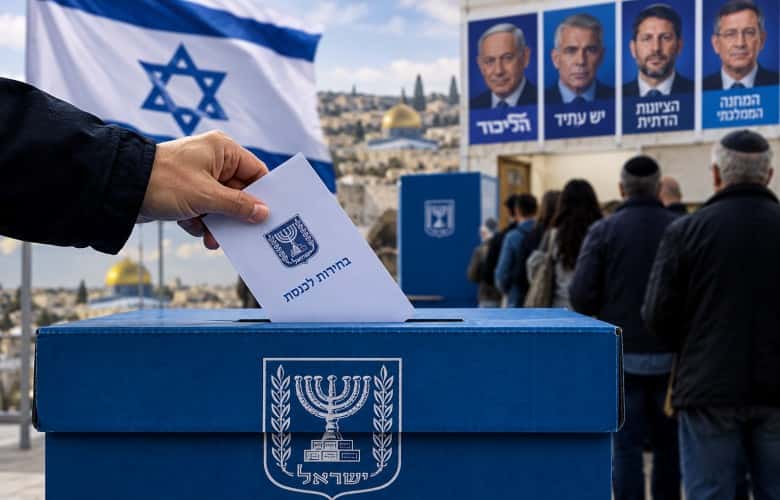
According to Channel 12, the Netanyah bloc takes 50 seats and the Eisenkoti 52. There 11 projects 50 seats for Netanyah and 53 for Eisenkot, while the Arab parties get 17. Ra’am and Joint List may have a crucial role in forming government.
Likud appears as the largest party in most polls: 24 seats according to Channel 12 and 25, according to Kan 11, while Eisenkot’s Yashar party gets 21 to 22 seats. Channel 14, close to Netanyah, paints a completely different picture: 60 seats for the ruling coalition and 60 for the opposition.

Block i Netanyah Fall, parties Arabic Get up
According to Channel 12, the Netanyah bloc drops from 68 seats in the previous parliament to about 50. At the same time, Arab parties mark a significant increase from 10 seats they had in 2022. Voter turnout was the highest at least since 1999.
These are the first elections in Israel since Hamas’ attack on October 7th 2023 and the subsequent Gaza war. Netanyahu, the prime minister with the longest period in power in the country’s history, has been at the helm of the government from 2009 to 2021 and has returned to December 2022. He faces sharp criticism for security failures and war management. He has also been charged since 2019 with bribery, fraud and trust violations, which he denies.
Eisencott: Disbelief share Netanyah
Eisencott, former chief of the General Staff and party leader Yashar, said exit polls show a complete distrust of Netanyah and the 7 October government. According to him, if these results are confirmed, this will be a victory for the principal Zionist majority in Israel.
However, with even more seats than Netanyah’s camp, the opposition does not guarantee government formation. It needs at least 61 MPs, which requires agreements with small parties and groups with very different positions.
Hurdles Main: parties Arabic
The proportional system in Israel makes government formation common through coalitions, so the result of a single party is not enough to determine who will lead the country.
On the one hand, Bennett and Lieberman have openly ruled out the possibility of supporting Arab parties, and Eisencot himself says Ra ‘%am and Joint List are not possible coalition partners. About 71.5% of Jewish Israelites opposed their involvement in the government. On the other hand, support from outside the coalition remains a different option than direct involvement, and the Joint List has stated it is willing to provide this support to a government without Netanyah.
The issue could be crucial if the final results confirm that no bloc has 61 seats. In a fragmented parliament, the position of smaller parties will determine whether the opposition will remove Netanyah from power or whether he will again find partners to stay.
President Isaac Herzeg is expected to decide next week which party to give the mandate for forming the government. If no camp secures the majority, negotiations could last for weeks.
This impasse could serve Netanyah, as it could continue to remain as prime minister in office while negotiations are held. If the coalition is not formed, Israel could go back to new elections.
For now, these are only exit polls (exit Poles) and final count can change the figures. The main message is that the political battle in Israel remains wide open, and Netanyah’s future depends on his ability and opponents to secure 61 gold votes in parliament.
Sources: Reuters, France 24, CNN, Haaretz, Israel Hayom, Bloomberg, AP/PBS, RTÉ, JNS, Jerusalem Post, Middle East Eye
Source Layer: RTKLive