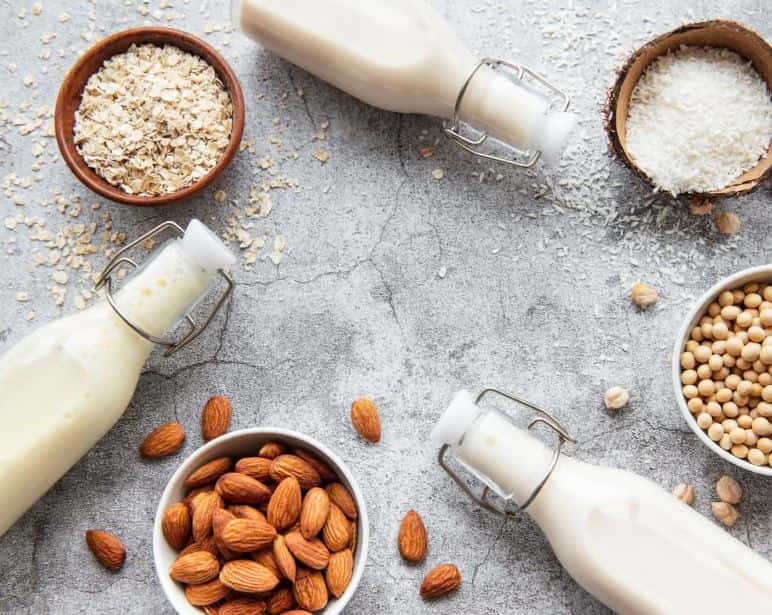
Switching from milk products to plant – based alternatives may cause a lack of certain important nutrients for the organism. So warns a new study published by the British newspaper The Guardian.
According to researchers, replacing milk, cheese, and yogurt with soybeans, almonds, or oats can lower the intake of iodine, calcium, vitamin B2, and vitamin B12, especially in cases where these alternatives are not enriched by vitamins and minerals.

The main concern lies with the iodine, an essential mineral for the functioning of the thyroid gland, order of metabolism, and brain development. According to researchers, more than half of the teenage girls in Britain do not receive the necessary amount of this mineral.
The study has shown that replacing between 20 and 30 percent of plant milk products may increase the percentage of teenage girls with insufficient iodine intake from 54 to 65 percent. In women between the ages of 19 and 49, this percentage may rise from 32 to 42 percent.
It turns out that the lack of iodine can have health consequences and that’s why we want to raise awareness of this problem, Dr. Sarah Bath, associate professor at Surrey University, said.
She noted that young girls and women of reproductive age are the most endangered groups, since iodine is of special importance during this period of life.
To analyze the nutrients of these products, researchers considered 146 species of plant milk, 76 species of yogurt, and 67 species of cheese without animal ingredients, which are traded in Britain.
The results showed that 61 percent of the products contained increased calcium, while 46 percent were enriched in vitamin B12. However, only 19 percent contained increased vitamin B2, and only 12 percent were rich in iodine.
According to the model used by researchers, replacing one third of milk products with plant alternatives can reduce iodine from 9 to 21 percent. If all milk products are replaced by plant alternatives, insufficient iodine can affect up to 80 percent of teenage girls.
Researchers point out that enriching plant products with iodine would help prevent the problem.
However, this does not mean that all people who consume plant-based products will face food shortages. Dietologist Nicholas Ludlam-Raine, representative of the British Dietologists’ Association, has explained that this depends on the overall diet.
For anyone who chooses plant-based milk, I would recommend to check the label and select products rich in iodine, she advised.
According to dietologist, organic milk is not usually enriched with excess vitamins and minerals, so it may not provide the necessary amount of iodine.
Meanwhile, white fish, such as cod, eggs, and milk products, for those who consume them make up other sources of the mineral.
It has also warned that marine algae supplements should not be used as a safe source of iodine, as the content of this mineral can change significantly and, in some cases, be excessive.
The signal where the truth speaks before the news!
Source Layer: Signal