Eight women have been killed in Kosovo, mainly by former partner partners, so far during 2026. This averages one woman every five weeks.
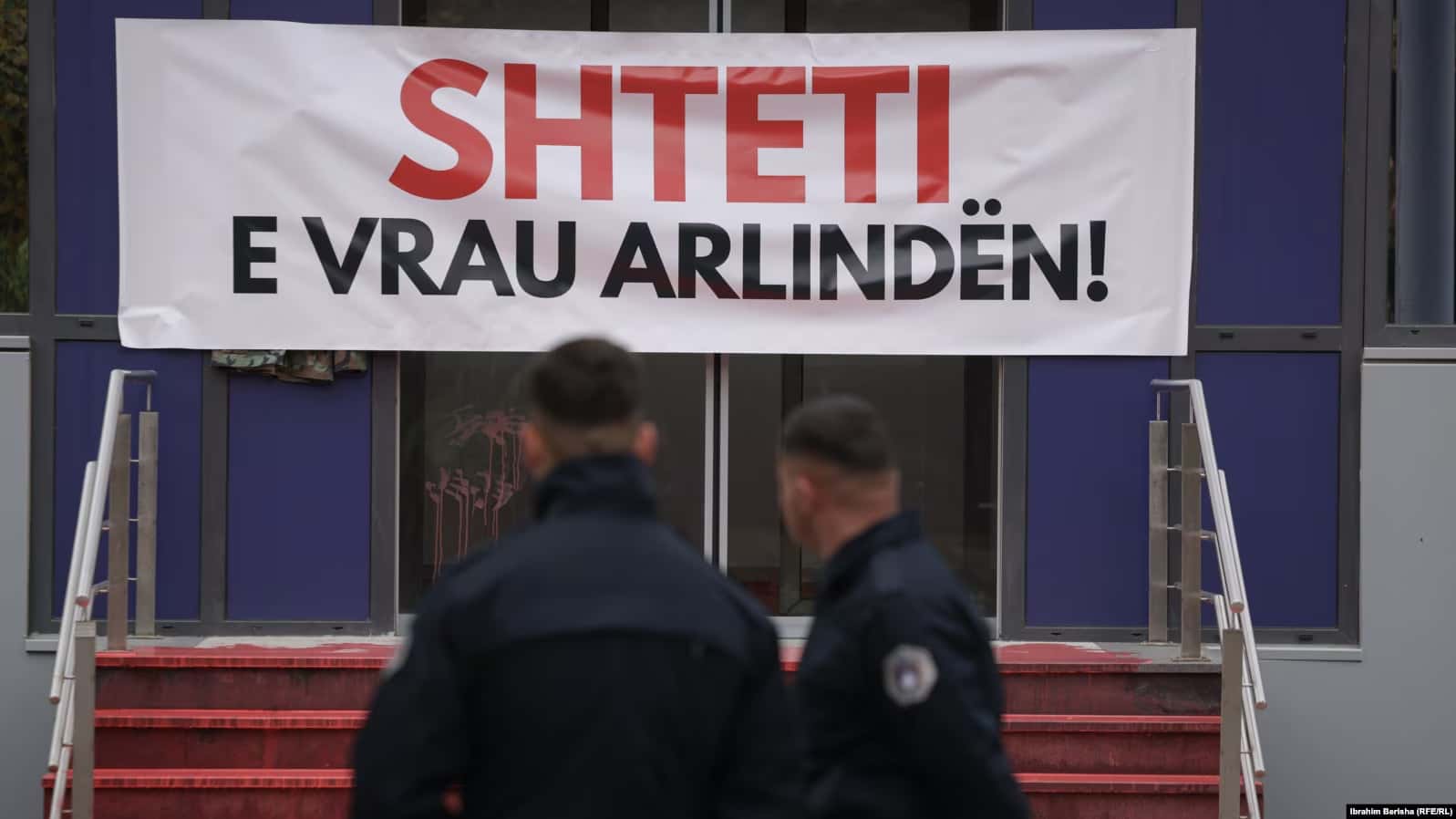
The latest murder — Arlinda Zekiaj’s in Vitomirica in Peja — on October 25th — has raised questions to public discussion about institutions’ response to domestic violence and the effectiveness of defence mechanisms.

Three days before the assassination, Zekiaj had complained to Peja’s chief prosecutor about how institutions were handling her case and had warned that her life was in danger.
I arrived Rezniqi from the Kosovo Institute for Justice ( The IKD says that when a woman seeks help and warns that she is endangered, institutions should react immediately and take concrete measures.
Presentation of the declaration, case registration or letter writing is not enough to consider meeting this obligation, Rezniqi says.
The risk assessment, she points out, should be repeated throughout the entire procedure, especially when there are new threats or circumstances change.
Zekij sought to return to her home, according to a court decision that recognized her right to the joint exploitation of that house with her former husband.
The founding prosecutor in Pec, the day after the murder, explained that the former husband had been arrested and, after interviewing both sides, he was detained and Zekij returned home, where her son lived.
However, a few minutes after Zekiaj’s return, she was allegedly hit to death by her brother-in-law. The chronology published by the Prosecutor’s Office does not explain whether the danger from other family members was appreciated and what the massacre was taken for her safety after her return.
The suspect in the murder is still on the run, while the Constitutional Prosecutor in Pec has called for detention for the former court’s contempt for order not to exercise physical or psychological violence against Zekij.
Rezniqi says that when danger is identifiable, but safeguard clauses are not taken, the consequences can be serious.
The underestimation of threats, the treatment of violence as private disputes, incomplete investigations and the failure to respond to violations of the measures could leave the victim exposed to escalation of violence, she says.
Following Zekiaj’s murder, the chief state prosecutor requested a detailed report to clarify whether there had been concessions and institutional or individual responsibilities.
However, Rezniqi stresses that the responsibility should not be left solely in public statements, but the action of each official involved should be considered.
The extent of the impunity of institutional officials must end, Rezniqi says.
Failures Numbered Even Previous
Questions about the state’s response to domestic violence are not new. In March 2023, the Constitutional Court ruled that the state had violated the right to life of Sebahate Morina, who was killed by the former husband in 2021.
In August of that same year, Amnesty International reported that women trying to flee from violent relations in Kosovo face uncertainty and lack of state support for independent living. This, according to the report, forces some of them to return to violent situations.
The report also raised concerns about the way institutions handle cases of violence, including its minimisation and inefficient enforcement of defence orders.
In 2023, Kosovo changed legislation to give priority to investigating and judging cases of domestic violence.
And in December 2024 the electronic surveillance system was established to monitor those to whom courts impose protective measures. However, the use of this system remains limited.
For sociologist Gift Prokshi, the problem lies not only in law enforcement but also in how violence against women is understood and treated within society and institutions.
The number of murders indicates that forms of prevention by institutions are invisible. The institutions, better say, act after the act, after the killings have occurred, Prokshi says.
According to her, psychological violence, threats and cases of easier physical consequences tend to be downplayed, while the demand for additional evidence may hinder serious treatment of cases.
Prokshi points out that institutional officials are part of the same society and that patriarchal norms can influence the way they deal with violence against women. It requires specialised quartads that do not treat violence as a private matter and that continue to convey cases even when the victim withdraws from reporting.
Rezniqi says that, although the legal framework has improved, implementation of it remains a challenge. It requires documented risk assessments, emergency co-ordination in high-risk cases and clear responsibility for implementing safeguards.
According to Resenqi, when neglect is found in fulfilling tasks, disciplinary responsibility should be considered and, when legal conditions, even criminal, are met.
In his letter to institutions three days before the assassination, Zekiaj had called for urgent measures against officials who, according to her, had failed in fulfilling the tasks, as well as the immediate implementation of the trial decision on the house.
I wish the day would not come when you and responsible institutions would be forced to render an account only after my life is taken. Now I understand why there are so many murders!
How can protection of women be strengthened?
A day after Zekiaj’s assassination, the Parliament adopted a resolution calling for parliamentary investigation into responsibility in the Zekiaj case, as well as the Rougen revision within 72 hours of active cases with high risk of domestic violence.
Besides measures required by resolution, experiences of other countries show how women’s protection in practice can be strengthened.
No system in the world has completely eliminated the murder of women. The experiences of Spain and Australia show some ways in which institutions can strengthen the response to violence against women – through risk assessment, institution co-ordination, and consideration of cases of domestic violence-related deaths. However, women’s killings continue to occur in both countries.
In Spain, the number of women killed by partners or former partners fell from 659 in 2003 2012 to 526 during 2013, according to the Interior Ministry.
While it is not known which measure specifically affected this decline, the country adopted in 2004 a comprehensive law against gender-based violence and established specialised courts to handle cases of violence against women, enabling a more co-ordinated response to criminal procedures and related family issues.
While later created the VioGén police system, which estimates the risk of repeated violence and helps determine safeguards. The system also enables the institutions involved to exchange information. Spain also collects and analyzes information about the killings to identify the repeated risk factors and improve institutional response.
In Australia another mechanism aims to identify institutional shortcomings. In some countries and territories, teams operate that examine domestic violence – related deaths, analyze previous reports, and respond to institutions, and provide recommendations for preventing other cases.
For example, in New State South Wales, such a team was established in 2010, while a national network was established a year later that connects specialised teams to examine deaths in the context of domestic violence and enables the exchange of data, findings and recommendations among them.
Teams examine the circumstances of death and the history of violence that preceded them to identify signs of danger and intervention. They analyze what the institutions had in mind, how they responded to previous reports and where there may have been shortcomings in providing services. Comparing the cases between them, teams identify repeated models and make recommendations on improving institutional responses, writes rel.
The experiences of Spain and Australia show that protection does not end with reporting violence. It requires that institutions assess the danger, exchange information, and learn from past cases, even considering what has not worked when a woman is killed.
The signal where the truth speaks before the news!
Source Layer: Signal