
The Supreme Court of Kosovo has had a total of 1,000 and 106 subjects in the third quarter of 2026, of which 498 have been resolved, while 608 have remained unfinished.
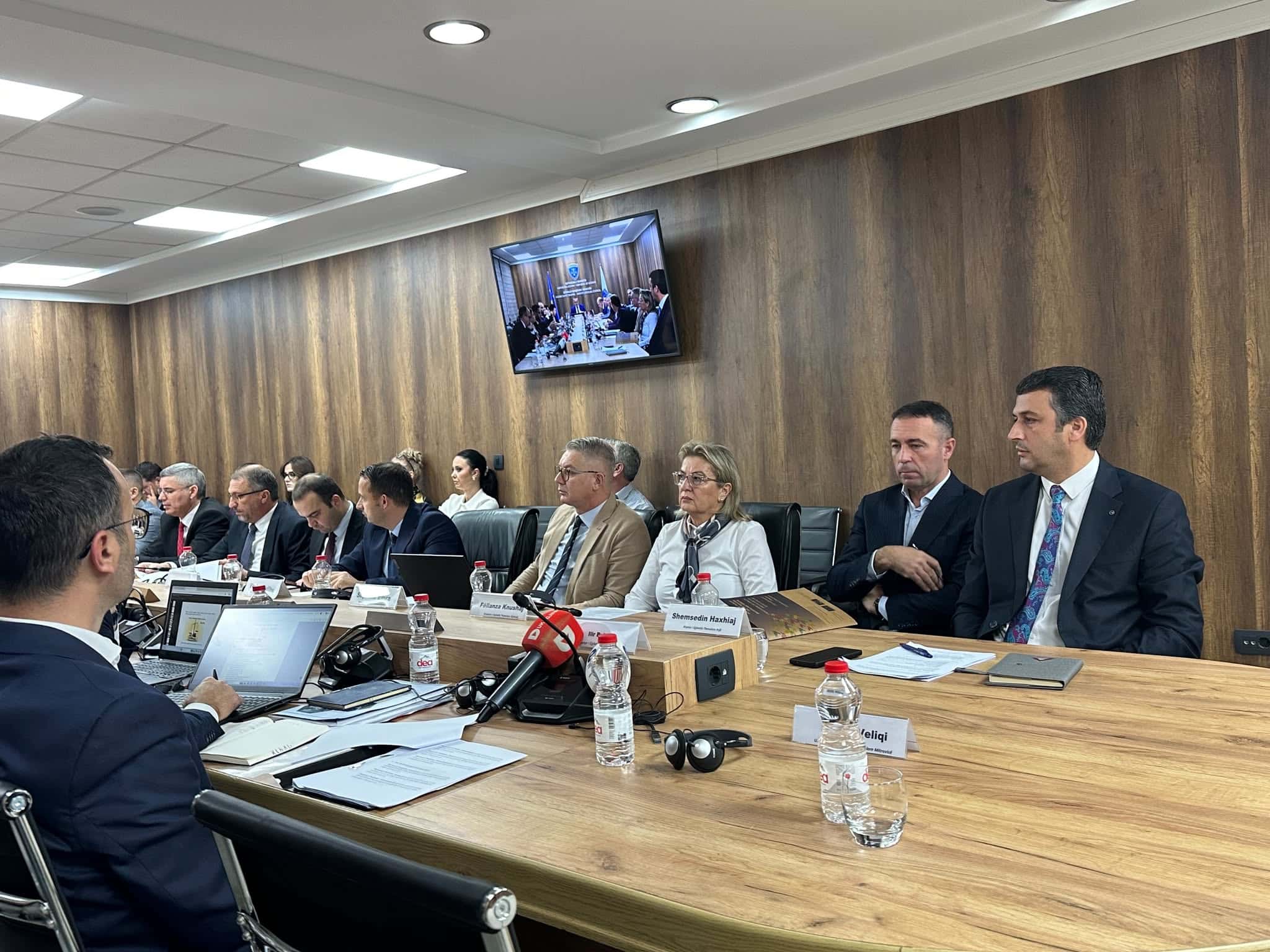
According to report presented before the Kosovo Judiciary Council ( During the July-September period, the efficiency of the work of the Supreme Court has reached 89.57 percent.

The report on the activities of this court has been presented by a judge in the absence of the Supreme Court chairman. He has announced that of the 1,000 and 106 subjects at work, 556 have been accepted during the reporting quarter, while 550 have been delivered from preliminary periods.
During the third quarter of 2026, we have had a total of 1,106 subjects, out of which 556 subjects are accepted during this reporting period, while 550 are carried out by preliminary periods. 498 matter has been resolved, while 608 materials have remained unspoiled during this reporting period. The Supreme Court’s efficiency, expressed in percentage, is 89.57 percent, the judge has declared.
He has said that during this period the institution’s work has focused on solving subjects, increasing efficiency and unifying judicial practice.
Over this period of time, the court focused on exercising its legal competencies, on the focus of solving subjects, increasing efficiency and unifying judicial practice. These are three-four pillars that constitute the foundation of the Supreme Court of Kosovo, according to the Court Law, he has said.
As for the selected subjects, the largest number make up the requirements for protection of legitimacy and revision requirements.
According to the released data, the Supreme Court has resolved 209 requirements for protection of legitimacy, 155 requests for review, 39 administrative reviews and 18 demands for extraordinary reduction of sentence.
In addition, 17 requirements for extraordinary administrative retrials, 13 economic reviews, 13 administrative indictments, 10 administrative complaints, nine different civil subjects, nine detention complaints, five requirements for protection of civil issue legitimacy, and a third degree criminal complaint have been resolved.
The judge has also reported on institutional activities of the Supreme Court during the months of July, August and September, including meetings with international partners and workers for advancing the tribunal’s operation.
He has announced that on July 8th, the chairman of the Supreme Court has participated in launching a report by the Organization for Security and Co-operation in Europe ( O The SEU, where the work of this court and its competencies has been discussed in handling war crimes cases.
Also, the Supreme Court has hosted a delegation of Germany’s Embassy, while a meeting has been held with the new EULEX Mission chief during August. According to the report, support for the judicial system and the importance of institutional co-operation for maintaining its independence and integrity has been discussed at these meetings.
One of the important activities of this period has been the two-day worker, held on July 16th and 17th, for the review of the draft regulation for organising, working and holding full hearings of the Supreme Court.
The judge has estimated that this normous act is necessary for the functioning of the institution and advancing transparency and efficiency standards.
A worker was held on July 16th and July 17th of 2026 for reviewing the draft regulation for organising, working and holding full hearings of the Supreme Court. This is a badly needed normable act for the Supreme Court of Kosovo, since there will be many aspects of the Supreme Court’s work, in the sense of regulation and advancement of the standards of transparency, efficiency and institutional functioning of this court, he stressed.
Six Discipline complaints
During the third quarter, the chairman of the Supreme Court has addressed a total of six disciplinary complaints involving judges and judges of the Supreme Court.
Of these, two complaints have been rejected, while in four cases, the earlier requests have been rejected.
A brief point to the disciplinary decisions that the Supreme Court president has handled during this period. There are a total of six disciplinary complaints, of which two have been rejected and four are dropped requests that have been filed over judges and judges of the Supreme Court, have been disclosed during the report’s presentation.
858 Court Decisions Published
The report also included the work of the Supreme Court in the field of transparency and communication with the public.
During the July-September period, the Office for Information and Communication with Media has published a total of 858 judicial decisions. Of them, 510 are Supreme Court rulings, while 342 are from the Special Chamber. Also, eight media communiqués and 18 social networking posts have been published.
An inevitable importance of the Supreme Court gives transparency and communication to the public. For this reason, the Media Information and Communication Office, which operates under the Supreme Court, has published 858 judgments, of which 510 by the Supreme Court and 342 from the Special Chamber, eight communiqués and 18 social networking posts. The total number of decisions published by the Supreme Court has now reached 21.725 judicial decisions, the judge has declared.
Meanwhile, 62 requests for access to documents and official information have been accepted during this period, from which two have been rejected. Also published is the schedule of 13 Supreme Court hearings. / EO
Source Layer: Dukeagini