

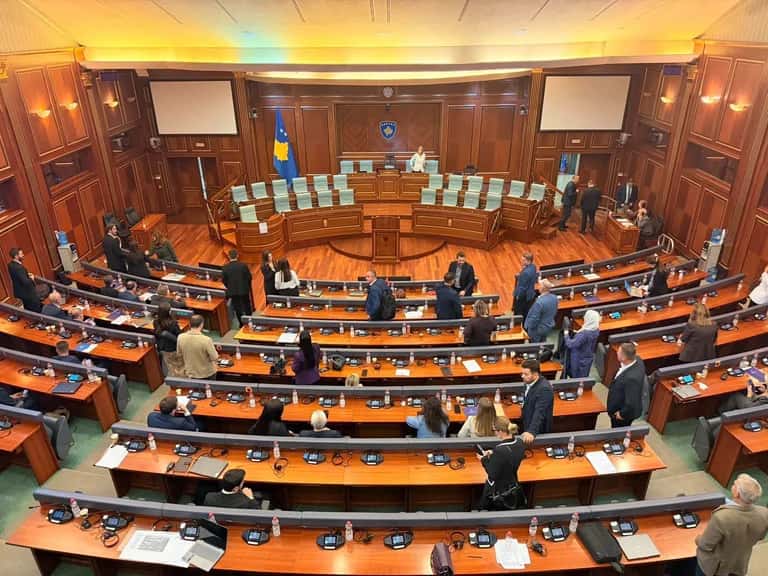
The Kosovo Assembly has failed to adopt the resolution, which called for urgent measures to ensure continued supply of essential drugs, especially for oncological patients, as there were no sufficient quorums in the hall.
63 MPs were present in the vote. Of them, 42 voted for the resolution, while two abstained. However, the votes did not suffice for its approval.

The resolution was proposed by Democratic Party of Kosovo MP ( PDK), Sala Jashari, who sought from the Ministry of Health and Hospital Service and the University Clinic of Kosovo ( SHSKUK) to immediately undertake all legal and administrative measures to ensure regular supply of essential drugs and to prevent cut-off therapies due to stock shortages.
Through it, Jashar had demanded that the Ministry of Health, within 15 days of adoption of the resolution, submit a detailed report on January 1st October 2026. The report would have to include the list of oncological drugs that have been missing, the duration of shortages, the number of affected patients, their causes, and the status of procurement procedures.
Another requirement of the resolution was the establishment and implementation of an early warning mechanism, as well as the definition of a minimal safety stock for critical oncological drugs. Clear and deadlines for launching supply procedures were envisioned before the stock reached the critical level.
Similarly, the Health Ministry would have to analyse the legal and financial basis for the possibility of creating a mechanism for restoring recorded spending of patients who have been forced to buy their own drugs from the essential list because of their lack of the public system.
The proposal included identifying institutional responsibilities for failures or delays in planning, procurement and supply of palbociclib, biomics and other oncological drugs that have been lacking during 2026.
Meanwhile, USKUK was required to continue and standardise regular, accessible and up-to-date publication of the stock state of essential medicines at the Oncology Clinic, including reports of expected shortages and projected supply deadlines.
In the end, the resolution envisioned that the parliamentary health commission responsible for monitoring its implementation and, within 60 days, inform the Assembly of the implementation level.
The signal where the truth speaks before the news!
Source Layer: Signal