

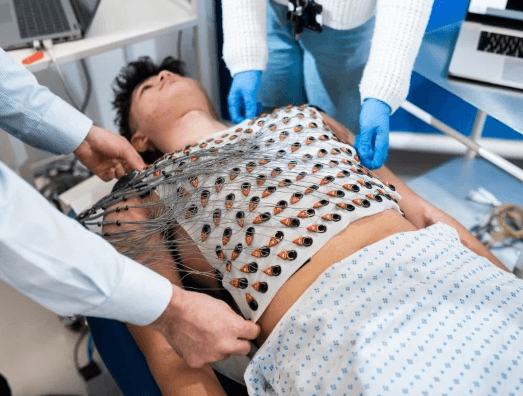
An intelligent vest that reads the electrical signals of the heart can identify the elderly with dangerous cardiac changes related to age, according to a new study presented at the American Heart Association’s scientific conference in Chicago.
Developed by a team of researchers at College London ( U n CL, this imaging vest ECG ( ECCI) has been sewn in with 256 electrodes in it compared to only 10 electrodes used by a traditional ECG. It can be washed, disinfected, and reused indefinitely, creating a detailed map of heart electrical activity in just five minutes.

How does it work, and what does it reveal?
Researchers examined the hearts of 402 older people (aged 76), who wore a vest and underwent magnetic resonance scan ( MIRI). The results were surprising: About 70 percent of participants had cycactarial tissue (pactal or old signs in the muscle of the heart), which is born naturally over the years by heart conditioning or blockages of blood vessels.
Even the smallest injuries observed in individuals who had never had a heart attack were affecting the electrical system that powers each beat.
signal for cardiovascular disease
According to the findings, electrical disorders detected by this vest serve as an early warning of serious complications, such as heart attacks, strokes, heart failure or aerial fibrillation. Researchers noted that patients who had weaker points in the electrical signal that helps the heart relax between beatings were evidently higher likely to be hospitalised within an average period of 13 months.
Professor Gaby Captour, cardiologist and head of the UCL study, stressed the importance of this discovery:
When we value the danger to the heart with age, we usually think about blood pressure and the hardening of arteries. This study, however, shows that there is a great deal of importance in the heart as well. Our vest gives us a much more detailed view, helping us identify the highest – risk elderly who need closer monitoring. )
Heart signals roadblock obstacles
Unlike other cells in the body, heart muscle cells do not regenerate when they die, leaving behind the heart tissue. Dr. France Morselli by team UCL explains that these signs act as a roadblock that diverts electrical heart signals.
This electrical disorder was known to cause irregular heartbeat, but these findings suggest that it could be an alarm signal for other serious problems, she said.
Although researchers point out that further research with a broader group of patients is needed, this technology is seen as a huge step toward preventing deaths from heart disease and the extension of healthy life in older people.
Source Layer: Signal