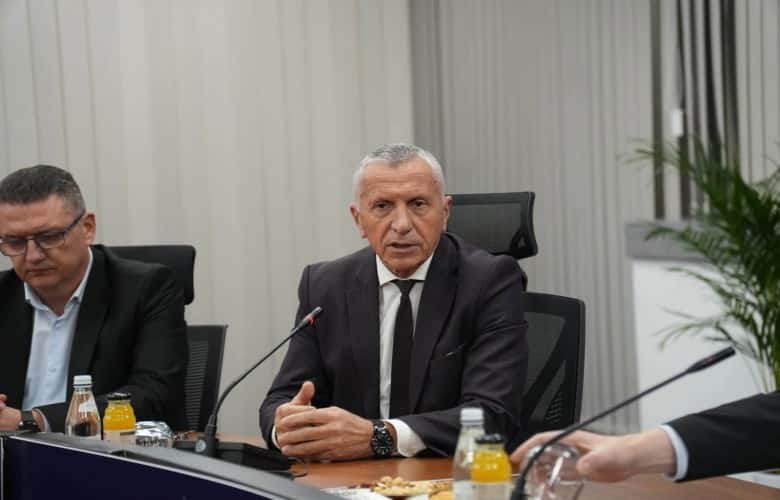

KIsraeli incumbent Minister Benjamin Netanyahu and opposition leader Gadi Eisencot have held talks in an effort to resolve the stalemate created by last month’s elections.
Netanyah’s bloc won 53 seats in the October elections, while the Eisenkot bloc — consisting of four parties — won 48 seats; hence, none of them managed to secure most in the 120-seat Knesset, reports BBCKlankosova broadcast.tv.
On Saturday, Netanyahu proposed a national unity government with the post of rotating prime minister, expressing readiness for Eisenko to take the prime minister’s post first.
Eisenkoti is available a week, as the deadline for forming the government expires on December 6th.
In a post on the X platform on Saturday, Netanyah declared: My responsibility as a leader obliges me to put aside everything else, including the principle that the largest party should lead.
He added he would accept that Eisenkoti serve primarily as prime minister, while I will serve as alternative prime minister at the beginning of the mandate.
The former army chief, Eisencott, responded by inviting Netanyah to real and accelerated articles.
This comes as, Friday, Eisenkoti accused Netanyah’s right-wing party, Likud, of stalling talks on the coalition aimed at provoking new elections.
Israeli President Isaac Herzeg consulted with all parties after the 27 October elections and later commissioned Eisenkot to form the government within 28 days.
Eisenkoti has been trying to establish a coalition to remove Netanyah from power and has noted progress towards securing the needed majority, reaching coalition agreements with two parties.