
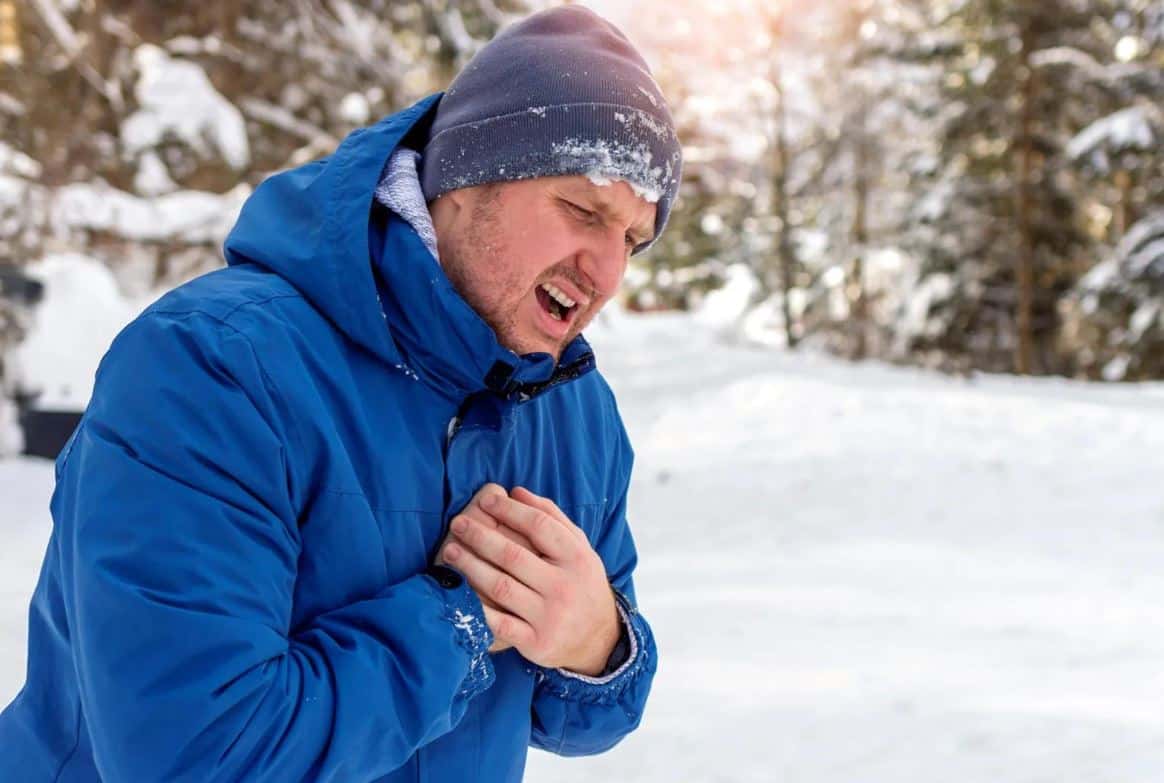
The sudden drop in temperatures during cold days can directly affect the health of the heart and blood vessels, increasing the risk of heart attack and stroke.
At low temperatures, blood vessels narrow down, which can cause arterial tension to increase. Blood can also become more prone to clotting, increasing the risk of cardiovascular complications.

The most endangered of these changes are those who suffer from heart disease and high blood pressure.
Even a relatively low temperature drop can affect the increase in heart attacks. In the meantime, heavy physical activity in cold environments, such as cleaning snow or excess strains, can load the heart even more.
Warning Signs That Require Attention
Some of the symptoms that may warn of a serious health problem are:
Pain or chest handshake.
Pain in the arms, shoulders, back, neck, or jaw.
Hard to breathe, cold sweat, mixed and dizzy.
Hanging on one side of the face, arm weakness and speech difficulties.
In the event of such symptoms, it is recommended that medical attention be sought immediately through emergency 124, even if the symptoms leave.
How can you protect yourself during cold days?
To reduce the risk, warm clothing is recommended, avoiding excessive physical strains at low temperatures, and limiting alcohol consumption.
High – blood pressure sufferers should also consult a doctor before using anti cooling drugs, since some of them may contribute to increased arterial tension.
Enhanced winter care is especially important for people with cardiovascular problems.
The signal where the truth speaks before the news!
Source Layer: Signal