
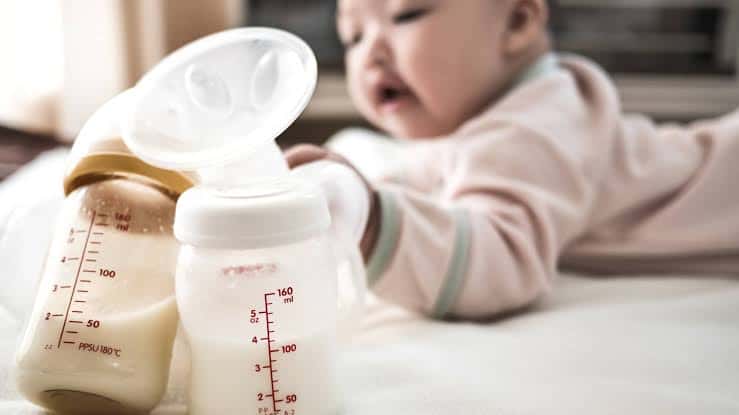
The breast milk is much more than a food source for the baby. It provides the nutrients needed for its growth and development as it plays an important role in strengthening the immune system and developing the microbioma in the intestines.
Edocrinologist Dr. Esmeralda Chelia, invited to the podcasts cycle ʹObesity Let’s talk about it, explains that breast milk contains not only calories, carbohydrates, fats, and proteins but also biologically active ingredients that contribute to the baby’s healthy development.

According to her, the growth factors and immunoglobulins found in breast milk contribute to the support of the baby’s immune system. At the same time, it contributes to the formation of ovum microbioma, which plays an important role in general health and can affect the risk of certain future health problems.
How does a mother’s weight affect breast – feeding?
Dr. The key also stops in the relationship between maternity obesity and difficulties in the matter. According to her, women who are overweight or obese may more often face difficulties in starting and continuing lactation.
Such difficulties may be related to hormonal changes but also to physical concerns that can make breast – feeding more difficult.
On the other hand, gender can help the mother to recover after birth and to reduce her body weight gradually, since milk production requires energy.
Do breast – feeding reduce the risk of child obesity?
According to the doctor, breast – feeding children generally have a lower risk of being overweight or obese, both in childhood and later in adulthood, writes liveing.al.
However, it stresses that body weight is influenced by many factors, including the family environment, socioeconomic conditions and childhood feeding habits. Thus, breast – feeding is an important protective factor, but it does not determine the performance of body weight alone.
The signal where the truth speaks before the news!
Source Layer: Signal