

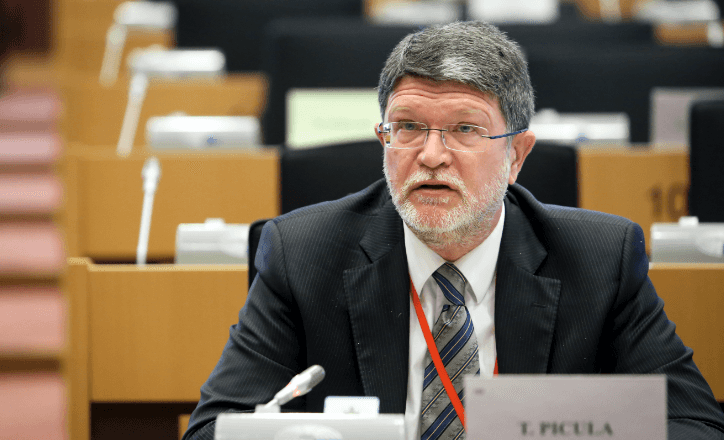
The rapporteur for Serbia at the European Parliament, Tonino Picaula, has stated that Belgrade’s reactions to the Vukovar Resolution give no hope that Serbia will change its stance on the events of the wars of the 1990s.
Picaula has estimated that objections to the resolution, expressed by a student group in Serbia, are significant, as they reflect the political wing positions that won the elections and are already forming the new government.

Opposition students have claimed that the text of the resolution does not take into account the sufferings of the Serbian people.
According to Picaula, reactions from Belgrade do not differ from the interpretations Serbia has given for years for the wars of the 1990s.
What we have heard leaves little hope that soon there will be a change in how events that took place in Croatia, Bosnia and Herzegovina and Kosovo are interpreted, he has declared.
He has added that it remains to be seen whether the new Serbian government will have the capacity to secede from a policy, whose roots date back to the years of 80s.
Commenting on the content of the resolution, Picula has stressed that it conveys a clear message against aggressive and authoritarian policies, which through projects to create major states endanger peace and co-operation.
He has also praised Ukraine’s involvement in the text of the resolution, stressing that parallels can be created among peoples protecting their country from aggression and conquest.
It is important that these policies be identified in time, Picula has concluded.
The signal where the truth speaks before the news!
Source Layer: Signal