

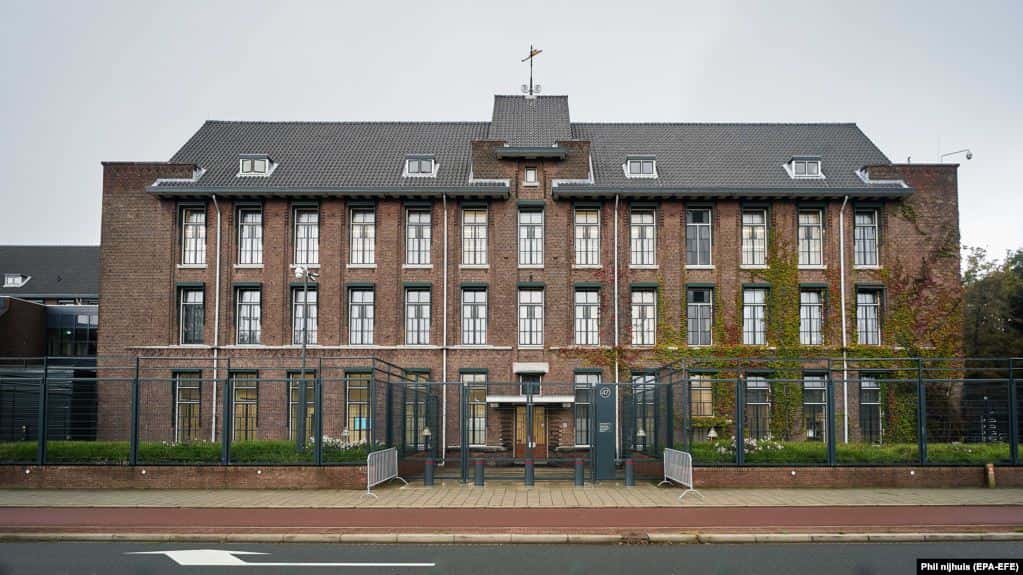
Kosovo will take a new initiative to amend the Law for Specialised Chambers and the Specialised Prosecutor’s Office, as changes proposed earlier in this 2015 law were not adopted, amid strong international objections.
However, experts have questioned the seriousness of Prime Minister Albin Kurti’s new effort and the Democratic Party of Kosovo. ( The PDK) in opposition.

Kurti and PDK agreed to a new initiative Thursday, the day the vote for proposed changes to this law, which would limit the competencies of this court, was postponed for a second time within a few days.
The changes adopted in October returned to the Assembly for review by the country’s president, Justina Shiroka Pula, at the request of the initiative itself, PDK. They were adopted a few weeks after the Special Court first condemned the four former heads of the Kosovo Liberation Army.
Kurti met with PDK chairman Vlora Citaku’s task officer Thursday to discuss changes to the Special Court Law. He had expressed reservations to the effect of the changes, which had sparked international objections, the REL writes.
The PDK had demanded that changes be adopted first and then, within two weeks of law entry, further changes be made to address international concerns. But, in the end, the party gave up this request.
Speaking at a Assembly session, Kurti said he does not suspect the good purpose of the PDK to change the law, but added that this is not enough just for us to succeed, we must succeed.
For this we need a law, which does not go back, is not annulled, but a law that has real effect, in practice, Kurti said.
Citaku, speaking later at a media conference, said he and the prime minister have agreed to the content of the law and the changes it needs to make.
The results were in parliamentary procedures. Today we also agreed on the course we will take. We bring the new legal initiative immediately next week, with our concrete proposals and expert proposals, Citaku has said.
More seriousness, political calculations
Politologist Dritero Arifi and justice affairs connoisseur Ehat Miftaraj assess that this new effort to change the law, on the basis of which the Kosovo Parliament founded the tribunal in The Hague a decade ago, testifies to the lack of political will and seriousness, as well as the calculations of LVV and PDK.
Arifi says about Radio Free Europe ( REL) that this initiative is a challenge of failure, irresponsibly and inadequacy to change and meet this law over time.
Meanwhile, Miftaraj from Kosovo Institute for Justice ( IKD says for REL is unfortunate, both LVV and leadership. The PDK, they have decided on such a sensitive topic to play political games.
Arifi points out that power and opposition have shown concernlessness in order to take this matter literally since legal changes were presented following the September 16th condemnation of the former KLA leaders.
Hashim Thaci’s sentence, Kadri Veselini, Jakup Krasniqi and Rexhep Selimi KLA who led during her fight against Serb forces in 1998-99 to a total of 81 years in prison for war crimes sparked numerous protests in the country.
Protests were temporary and ended on the night the Parliament approved changes aimed at restricting the powers of the Special Court evidently.
Arifi believes that the changes were only kind of rational that protests did not escalate.
There was no seriousness in doing something more concrete, that is, to limit it, or not even to break the court, because this court is seeing that it has strayed from what was founded, Arifi points out.
New Changes
Citaku said the new changes would be based on the text the Assembly had approved in two readings in October, but did not elaborate on what they would contain.
Over that text we will make the changes necessary to make the law more judicially sustainable and to give our rescuers concrete state support, Citaku said.
Kurti, meanwhile, did not talk about the content of the changes, but only said they should comply with Kosovo’s constitutionality and legitimacy.
Politologist Arifi called this account assembly by stressing that they should speak publicly about what points should be touched and what should be improved.
The question is whether there’s going to be a quorum, because there’s no agreement on the matter. It is more time buying and seeing who is reacting than who is serious, Arifi points out.
Changes That Did Not Go Away
The main changes that eventually failed to pass were aimed at narrowing the jurisdiction of the Special Court, limiting it mainly to claims of organ trafficking and murder, torture and cruel treatment.
They also envisioned limiting the maximum sentence to 15 years in prison, as well as the possibility of convicts serving sentences in Kosovo and profiting from presidential pardon.
The cases that would remain outside the new jurisdiction would be transferred to Kosovo’s justice system, along with relevant evidence and files. The ongoing cases would continue on appeal at The Hague, while the changes did not imply automatic annulment of existing judgments or the release of convicts.
The goal of adopting these changes prompted reactions from internationals. The European Union warned that they conflicted with Kosovo’s international pledges, which relate to the establishment and functioning of specialised rooms.
These vows stemmed from the exchange of the April 2014 letters between then president Atifete Jahjaga, and EU chief Catherine Ashton. Through this exchange, Kosovo had pledged to consult the European Union on any legal changes affecting the mandate or procedures of the Specialised Chambers.
Similarly, Kosovo had pledged to ensure the continuation of the work of Specialised Chambers and Prosecutor’s Office specialised until the outcome of the respective investigations and procedures.
The signal where the truth speaks before the news!
Source Layer: Signal