

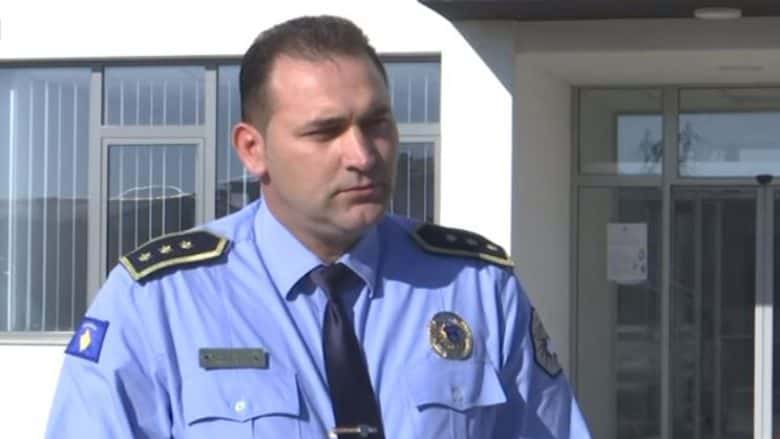
Colonel Lumni Graish, who for nearly eight years led the Regional Police Directorate in Gjakova, has been appointed adviser to the regional director in Ferizaj. The movement comes just two months after the directorate he led was ranked first in Kosovo in assessing the performance of the Kosovo Police Inspectorate, the Signal newspaper reports.
The decision has been made known by Graish himself, through a message to colleagues, where he has confirmed that his systeming in the new position was made with the decision of the Kosovo Police Management.

But passing a director with results documented by the direction of a police station in a position of adviser raises a question about the way Kosovo Police use their experienced cadres.
In September of this year, the Regional Police Directorate in Gjakova ranked first among eight regional directors praised by the Kosovo Police Inspectorate.
It reached 75.3 percent of the possible score, with an average score of 3.76 from 5.
Malisheva Police Station, part of the Gjakova region, also took first place among the 41 surveyed stations, with 79 percent of the scores.
The results do not represent an individual assessment of Grace, but testify to the performance of the police structure he headed.
The official report of the Kosovo Police for 2025 also records results in the area of public security. According to this report, during 2023,2025 in Gjakova and Rahovec no murders were registered, while a case was recorded in Malisheva in 2025.
Such results make it important to ask whether Grace’s new position will best exploit her experience and leadership capacities.
In his message, the colonel has thanked colleagues for joint co-operation and achievements, without expressing opposition to the decision.
He has argued that rotating leaders after a long period in the same position may be necessary for the organisation’s functioning.
According to Grace, staying on a task for many years can create familiarisation with personnel and the work environment, which may affect management decision making.
However, the rotation and exploitation of human resources are two issues that must be assessed together.
The change of directors may be reasonable for the needs of the organisation, but this does not rule out the need for their arrangement to rely on experience, results, and professional skills.
Under the regulation for organising and systematising jobs in the Kosovo Police, the regional director has direct responsibilities in staff supervision and management in the region.
Meanwhile, the concrete competencies Gray will exercise in the position of adviser at Ferizaj have not been clarified in the information made public.
For this reason, it cannot yet be determined whether its arrangement represents a better use of experience or a limit to its managerial responsibilities.
The question is not whether Grace should remain director forever in Gjakova, but if the police management has chosen the position where his experience and results can best serve the institution.
A clear answer to that would require publishing the systemial criteria and clarifying the responsibilities of the new position.
Until then, the transfer of the country’s most valued police region leaders remains a decision deserving of institutional explanation.
The signal where the truth speaks before the news!
Source Layer: Signal