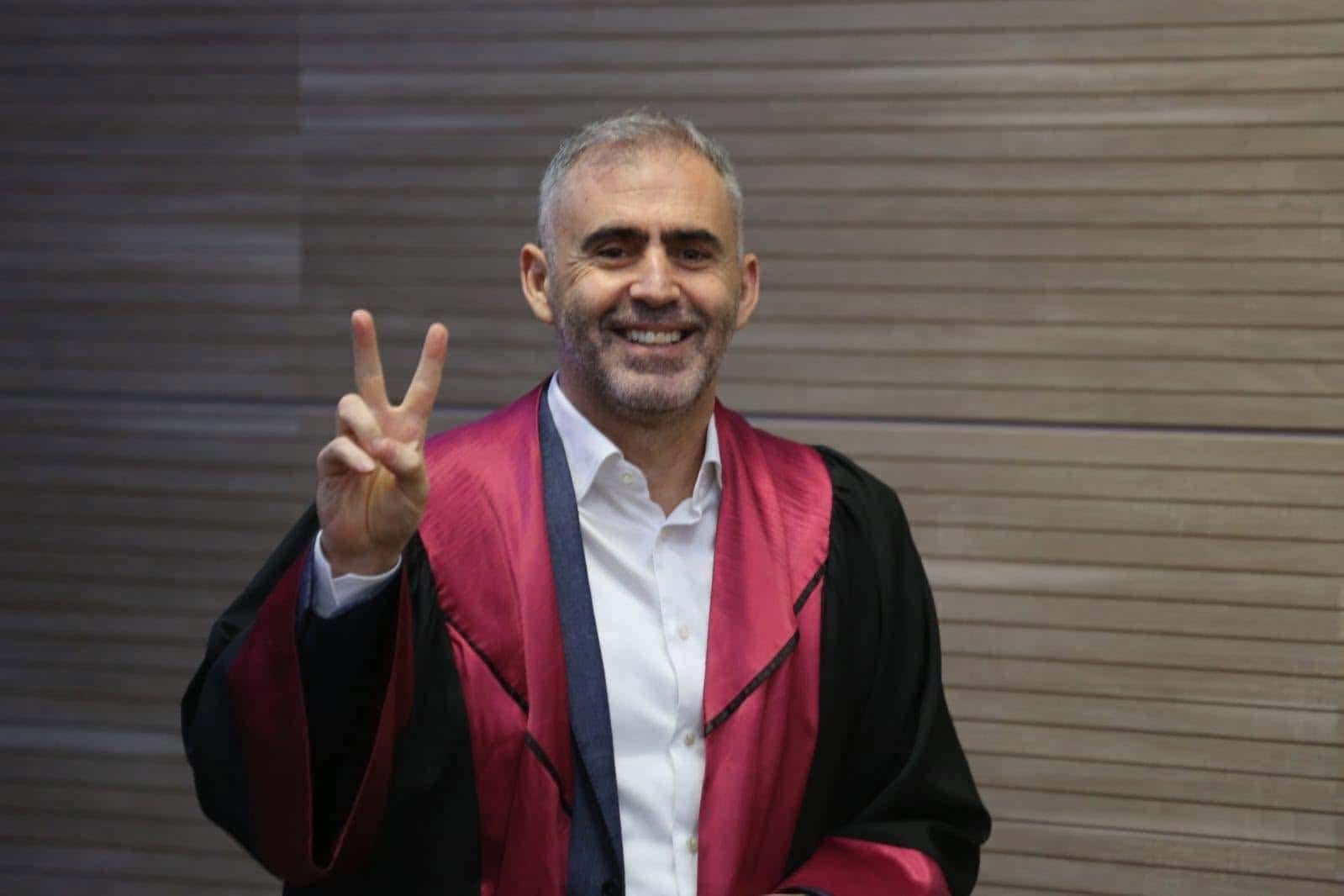
Faithful Lawyer R. Berisha, once chairman of the Kosovo Bar Council, has reacted with strong criticism of the current situation of the Democratic League of Kosovo, warning that Ibrahim Rugova’s party risks losing the ability to be a serious political alternative unless it faces responsibility for its losses and weakness.
In a personal stance, Berisha has estimated that the LDK crisis is much deeper than the election results, and that the main concern should be the loss of weight of speech, political authority and citizens’ trust.

) The LDK does not risk being left without history. He’s in danger of being left alone with history!
Referring to recent controversy over former President Ibrahim Rugova’s photo, Berisha has said the debate over her deployment should serve as the starting point for a more serious reflection on what the LDK represents today.
Rugova’s picture deserves respect and place. But it doesn’t bother me just where his picture is put. I am concerned about how little of his political philosophy is being witnessed today in the way the LDK thinks, acts and is represented, Berisha has written.
According to him, Rugova’s political legacy cannot be preserved only through symbols and commemorations if the principles that have characterised his political philosophy are lacking.
Rugovism is not a photograph on the wall, nor is it a name mentioned on anniversary. It is political culture, discretion in decisionmaking, courage to maintain attitudes and ability to build faith even beyond its own ranks, he has stressed.
Berisha has also talked about his personal connection with the LDK, remembering that it belongs to a generation that has first recognised this political subject through ideals, sacrifice and belief that politics can be exercised with dignity and state responsibilities.
He has clarified that there are no personal aspirations in the LDK, nor interests that would condition him to silence developments within it.
I have, however, a deep concern for what it has been, what it represents today and, especially, what it risks tomorrow, Berisha has declared.
In the most critical part of the response, he has questioned the way successive party losses have been addressed and leadership responsibility for political results.
When failure repeats itself, he ceases to be a coincidence and becomes a matter of responsibility. When responsibility is constantly avoided, weakness risks becoming political culture, he has written.
Berisha has also criticised a political culture where, according to him, criticism risks being treated as treacherous, thought otherwise as a threat and maintaining positions as evidence of stability.
He has demanded that the LDK make an honest review of itself, stressing that the reinstatement cannot come from managing the existing situation, but from restoring confidence, authority and the ability to inspire.
According to him, responsibility is not limited to individuals, but it is also related to the culture of direction and the lack of a vision that is witnessed by concrete results.
The LDK’s political tragedy would not be the defeat in the face of opponents. It would be the gradual loss of the ability to be an alternative to them, Berisha has warned.
However, he does not consider losing the possibility of regaining the party, but warns that the historical legacy cannot endlessly replace the lack of results and political authority.
In conclusion, Berisha has demanded that the LDK speak more about the country intended to have Kosovo in the future than about where Rugova’s photo should stand.
Rugova gave the LDK a special place in our history. But no one, not Rugova himself, can forever provide their offspring with the authority they must gain with their work, character and decisions, he has stressed.
The response has concluded with a message summing up his criticism of the party’s current direction:
History can keep LDK safe. But I can’t guarantee the place.
The signal where the truth speaks before the news!
Source Layer: Signal