
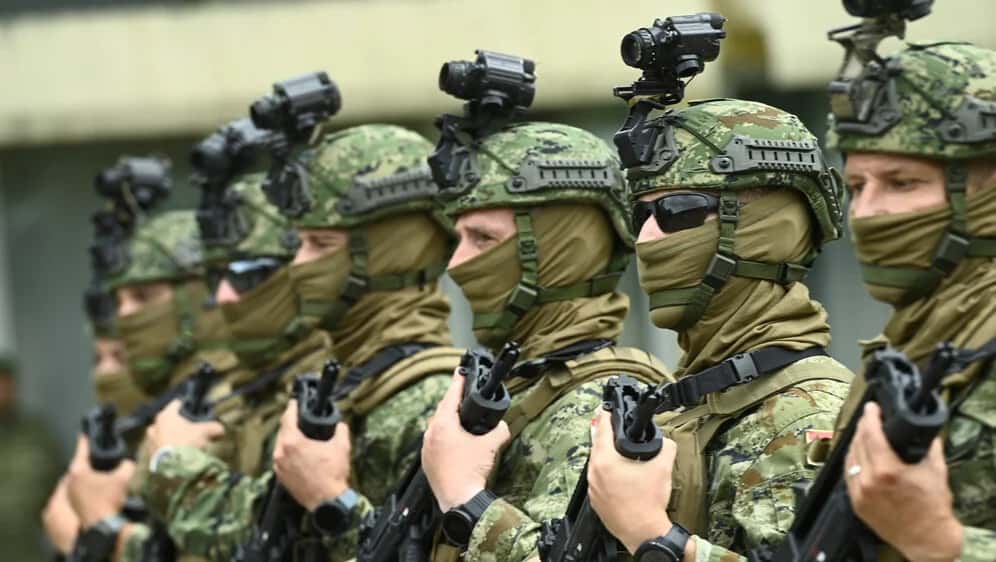
The Armed Forces of the Republic of Croatia during 2027 and 2028 will take part in 11 missions for peace support and other missions of the NATO and the European Union coalition, for which more than 500 soldiers will be engaged and will be separated about 85m euros from the budget, the state secretary in the defence ministry, Tomislav Galic, announced in the Croatian Parliament.
Croatia in 2022 supported the creation of combat groups under NATO’s reinforced vigilance activities. By participating in these activities, the Armed Forces develop their skills, increase the level of interoperability with the forces of other states, and contribute directly to strengthening collective prevention and protection, Gallic said, presented the Signal newspaper.

As many as 200 soldiers in KFOR direct exchange for Croatia
The government’s proposal for decisions on the participation of soldiers in EU and NATO missions has received the consent of Republika President Zoran Milanovic. Much of the financial means — around 50m euros — is envisioned for participation in the activities of NATO’s front ground forces, where sending up to 170 members to Poland with infantry combat vehicles to 120 in Lithuania and 220 in Hungary.
Meanwhile, up to 200 Croatian soldiers will serve in the KFOR mission in Kosovo, where Croatian forces have been present since 2009, while some 33m euros have been envisioned for the operation.
The operation for peace support KFOR has direct importance for Croatia because it is located in the direct neighbourhood and the deterioration of security would have consequences for the stability of Southeast Europe, including Croatia, the state secretary said.
A smaller number of soldiers will be sent to the Mediterranean in Greece, Cyprus, India, Pakistan and Lebanon for what some 2.5m euros have been allocated. Currently, the Croatian Army participates with 379 members in five peacekeeping operations and three NATO activities.
A tough record for NSATU mission, defence situation
Even though power and opposition support the proposed missions, parliamentary discussion was accompanied by clashes over the previous non-participation of the NSATU mission for training of Ukrainian soldiers. Representatives of the ruling majority estimated that Croatian soldiers and officers were deprived of new military knowledge and technology due to President Milanovic’s ban and the opposition’s stance.
Secretary Gallic singled out the Ukrainian Army’s experiences with the use of robots on the front lines, transporting ammunition by autonomous means, and anti-dime platforms, saying such experiences are being seen only on YouTube.
HDZ MP Ante Deur said that through these missions Croatia strengthens the international reputation, while Nikola Majar accused opposition of deinformation over the NSATU mission. On the other hand, SDP’s Arsen Back said his party supports peacekeeping missions, but praised the mission NSATU involved training Ukrainian soldiers by Croatian forces, not vice versa. Tomislav Josic from the Homeland Movement stressed the importance of new tactics as national security issues.
Meanwhile, Zvonimir Troskot from Most criticised the state secretary for, as he said, political approach, raising the question of why Croatia has no ambassador to NATO and why there is a lack of trust at the helm of the military structure.
The signal where the truth speaks before the news!
Source Layer: Signal