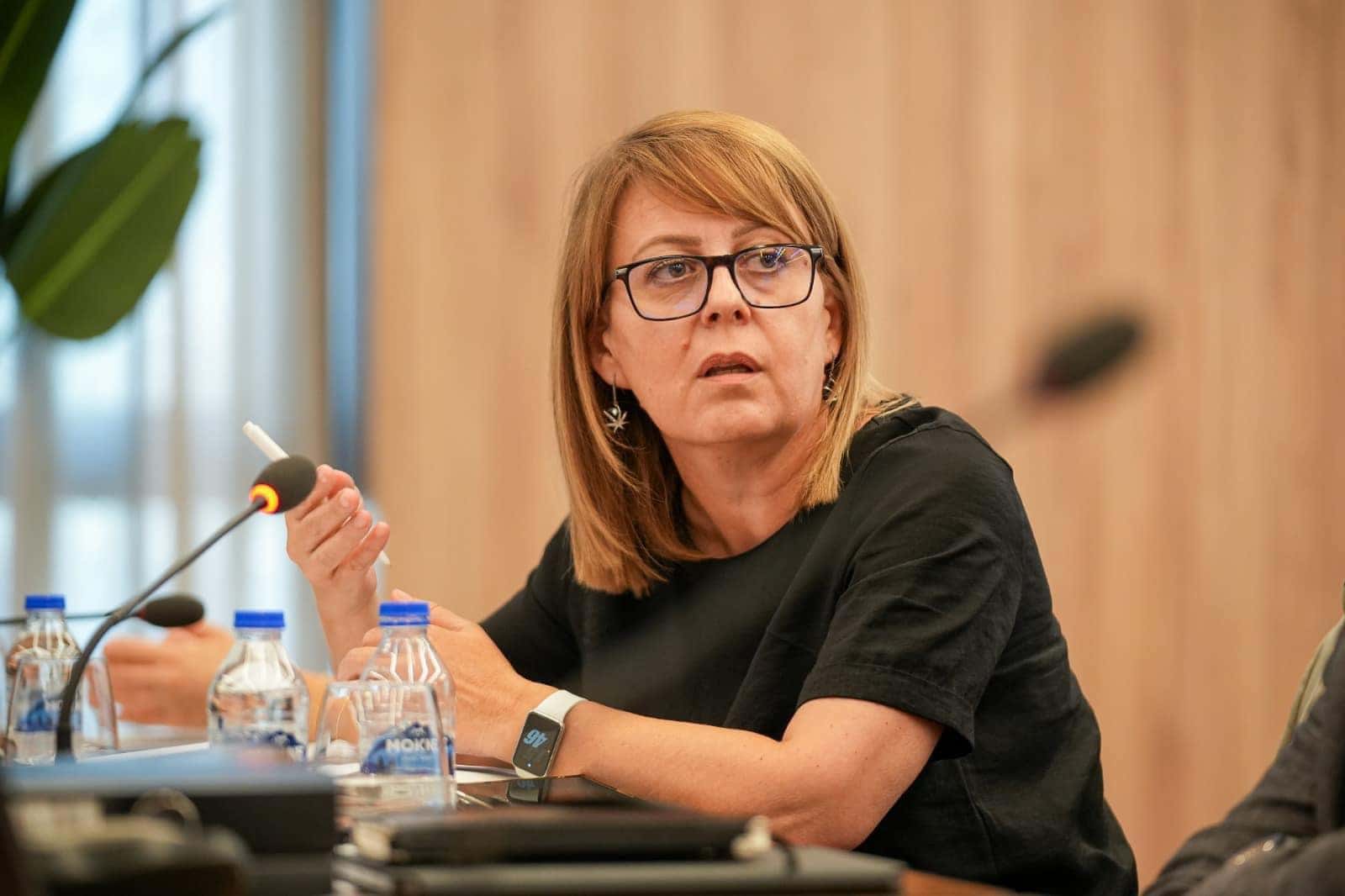


Democratic Party of Kosovo MP ( PDK), Bedri Hamza, has criticised the draft budget for 2027.
According to him, neither does it guarantee the maintenance of existing investments and services.

During the discussion at the Kosovo Assembly session, where the budget for 2027 is under consideration, Hamza said he would like the figures presented to prove that it is a development budget.
However, he estimated that the figures do not support such a conclusion.
Anything that’s good under the budget, I appreciate it. I wish the numbers, the numbers presented in this budget gave me opportunities with the consensus that this is a developmental budget. I’m saying this is a budget that does not guarantee maintenance, Hamza said.
He also stopped at economic growth, stressing that the 3.8 per cent rate is insufficient to address the challenges facing Kosovo’s economy.
Economic growth, as positive as it is, is not yet referred to as we wish, but is 3.8% real economic growth for 2025 expected approximately in this year. An economic growth of 3.8%, when we take the basis of Kosovo’s economy, is insufficient to address the challenges of Kosovo’s economy, he said.
Hamza cited the high trade deficit, worsening the current account deficit and inflation, which he said Kosovo has the highest rate compared to the countries in the region.
Kosovo’s economy has deep challenges. First, we have the high trade deficit. Second, we have a worsening current account deficit. And we have the highest inflation rate compared to all countries in the region. Yes, Kosovo has adopted the euro unilaterally. So is Bo and Montenegro. But it doesn’t have the same inflation rate. Neither do other Western Balkan countries nor do European Union countries, the deputy said. PDK.
In his address, Hamza stressed that the assessment of the economic situation should be made not only by the nominal amount of money but also by their purchasing power and impact on the standard of living.
When we’re talking about money, we’re going to have to have a fundamental difference. The value of money: what can you buy with that money today and how much you could buy five years ago? The standard of living of Kosovo citizens is getting worse, Hamza said.
It also raised concerns about increasing interest rates and expensive credit rates, saying this situation is not helping businesses. According to him, the loan demand structure has changed, as they already dominate loans for family economies.
Interest rates have increased. The weighted interest rate is 6.9%. Credit is expensive. Business doesn’t help in this form. If we look at the credit structure, in the past there are more demands for loans from businesses. Today, the demand for credit is dominated by family economies. Why? Family economies lack liquidity, he stressed.
Speaking of imports and exports, Hamza said that increased imports should be analysed even in terms of their volume, and not only at monetary value. According to him, the rise in value has been influenced by price expensiveness and inflation, while official data, as he said, show decline in volume imports.
What’s important? Import growth was discussed, and exports increased. But the growth of imports has occurred in value. It has occurred as a result of price hikes, of rising inflation. But the realst index of whether the economy is developing is whether imports have increased in volume. And if we refer to official data from the Kosovo Statistics Agency and other institutions, it turns out that we are behind the decline in volume imports. There is no one who can reason that there is stable, serious economic development, when we have reduced imports in volume, Hamza said.
Part of the MP’s criticism The PDK also devoted the budget structure, especially the participation of capital investments in the total expenditures. He said this turnout has dropped from about 30 percent in the past to 25 percent in the proposed 2027 budget.
The budget structure is being damaged. That’s a fact. In the past, participation in capital investments in the total budget spending has been around 30%. Today in the proposed budget is 25%. This is also in planning. In practice, I assure you it will be even lower, he said.
Hamza also criticised the way capital investment realisation is presented, claiming that part of the means registered as investments for schools, nests and roads are in fact being used for paying salaries as a result of judicial decisions and final orders.
Even when we’re done, there’s some kind of optical illusion here. It turns out it’s capital investment. It turns out it’s a school or a nursery. Both municipalities and especially municipalities. But I assure you that because of judicial decisions and the final order, they figure nests, they figure schools, they figure roads, but they’re actually in wages. Because wages from capital investments are real, he said.
Hamza said these contracts are also linked to past governments, but stressed that he had warned earlier on the issue.
Someone here could tell me, I say, that’s what happened to past governments. Yeah, yeah. These contracts have been written and I’ve already told you. Even then I told you. They didn’t come from the Ministry of Finance.
Source Layer: Insander