
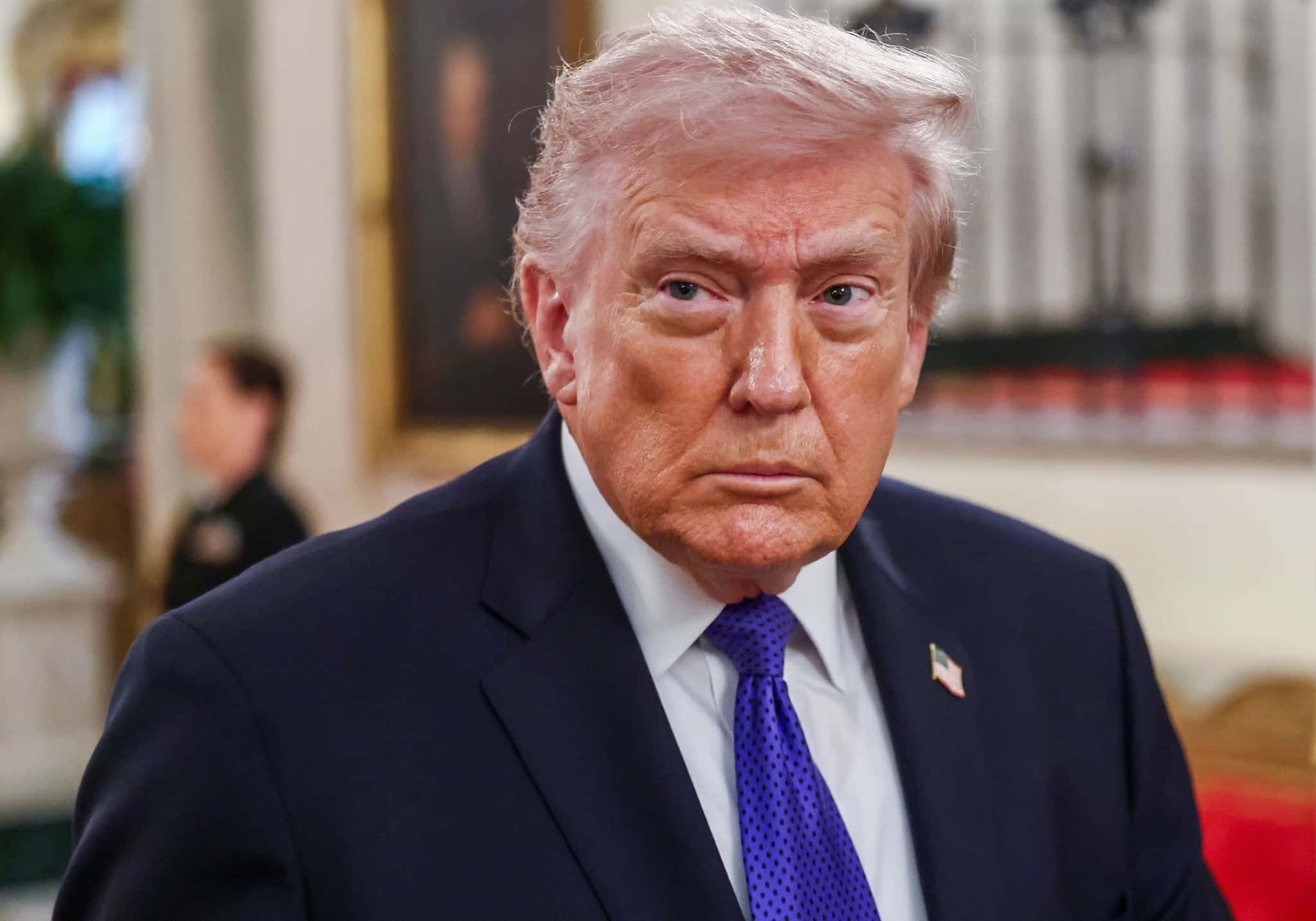
US Secretary of State Marco Rubio had informed President Donald Trump of the allegations that the executive director of the Nvivia company, Jensen Huang, had an affair with a woman who considers American intelligence to be a Chinese spy during the U.S. President’s trip to China in May. That’s what he reported. CNN, quoting a source aware of the case.
According to the source, the issue was discussed on the presidential board Air Force One, before Huang joined Trump and senior American officials in the final leg of the trip to Beijing, following a stop in Alaska.

However, Trump has denied Monday that he had knowledge of those allegations during the trip. He has stated that he had only recently learned about the case and that the FBI was investigating the case.
The American president has downplayed Huang’s findings with Alice Huang, leader of a headquarters technology company in Singapore, for which American intelligence has come to the conclusion that she is a Chinese spy. Two people don’t have family ties.
I really believe him, Trump told the director of Navia, adding that he believed he had no knowledge of the alleged spying operation.
According to CNN reporting, suspicions about Alice Huang were raised by the FBI about a year ago. The agents had warned lawmakers that Jensen Huang could be the target of a foreign intelligence operation, due to his close relationship with him. Investigators had also noted that Alice Huang had suddenly gained an unusual purchasing power for someone in her position.
In May, a classified memorandum, supervised by Secretary of State Marco Rubio, warned of Nvivia’s connection to the woman whom the US already considers Chinese spies. The document was distributed to a limited group of senior American officials prior to Trump’s visit to China.
According to CNN’s source, the president was informed of concerns during the trip, but did not take any apparent action to distance himself from Huang. Instead, he insisted that the director of Navisia join the US delegation.
The case has raised concerns about US national and economic security, especially about the possibility that Beijing has provided sensitive information about the American artificial intelligence industry and the advanced technology of semi-compliancers.
On Monday, senior administration officials Trump met with the so-called Eightshes Group, comprised of lawmakers responsible for overseeing American intelligence agencies. Information about Huang’s connection and spying allegations has been discussed at this meeting.
The Democrats have warned they will launch numerous investigations after taking over Congress in January. They seek to clarify what the administration knew and whether the decisions on export of advanced chips to China may have been influenced or compromised.
The export of advanced semi-convenients to China or to countries where it may have access to them is a matter of tremendous national security, said Jim Himes, the highest Democrat of the House Intelligence Committee.
Even the Republicans have asked for an explanation from Navia. Three republican lawmakers have asked Huang to participate in a confidential information session this month.
Huang, who cofounded Navilia and turned it into one of the most valuable companies in the world, has had great influence on the Trump Administration’s policies for artificial intelligence. He has repeatedly sought to ease restrictions on the sale of advanced American chips in China.
Navisia, meanwhile, has announced it will hold its investigation into the executive director’s behaviour, but it is still unknown whether the company board will consider the possibility of his dismissal.
Such a decision would have major implications for the company, as Huang is considered a key figure in Nvivia, which supplies key chips at the centre of the global artificial intelligence boom.
The signal where the truth speaks before the news!
Source Layer: Signal