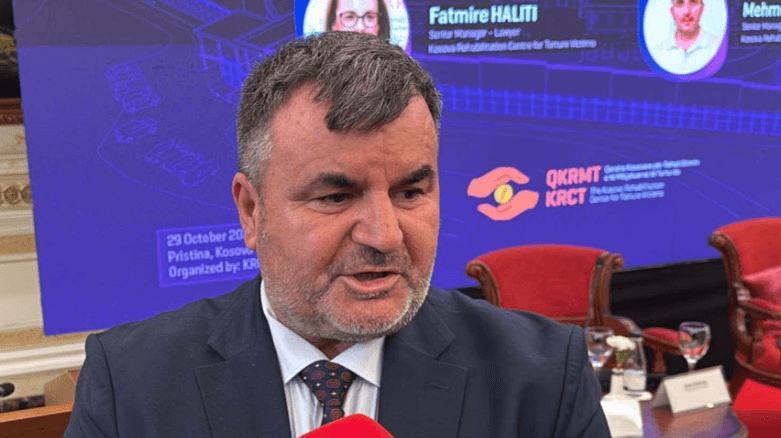
People’s lawyer, Naim Qeyaj, has stated that in the case of the murder of Arlinda Zekaj, there are serious doubts about direct state responsibilities, assessing that institutions have not done enough to protect victims of domestic violence.
He has called for full whiteening of responsibilities, concrete preventive measures and accountability by responsible authorities.

Celaj has said that although a final assessment of all the random circumstances has not yet been made, the facts being made public raise serious concerns about the way institutions have acted to protect the victim.
What I can say at this stage, when we have not yet investigated all the details, is it seems very clear that the state’s responsibility in this case has not been shown at the proper level. So the state has failed to protect the victims of domestic violence, Celay has declared.
He has stressed that concern becomes even greater because, according to him, institutions’ failures are not isolated cases, but problems that have been repeated over the years, despite repeated recommendations and calls for intervention.
More serious is the fact that these failures and such concessions are systematic, are consistent, and occur despite calls, recommendations, and voice raising to ask the state to have proper attention and seriousness in the approach. Institutions should take precautions because they have direct responsibility when a person loses his life after presenting the case before the state, he said.
Commenting on cases of murder of women and domestic violence, the Ombudsman has stressed that public institutions should assume their responsibilities and not react only after tragedy strikes.
According to him, the size of the problem requires a more serious approach and concrete measures by responsible authorities.
I don’t think it’s time we only reflect on the consequences, because they’re tragic. Only this year are eight cases of women killed. I firmly believe that public authorities should assume responsibilities, because they’re in charge, and for that they’ve been trusted, Celay has been expressed.
He has recalled that the obligation of the state does not end only with a lack of human rights, but it also includes the obligation to protect them in cases where there is danger of vulnerability.
It is the direct responsibility of the state, because the positive state obligations are not only to refrain from violating human rights, but also to take measures to ensure respect and protection of these rights whenever they can be violated, he has declared.
Celaj has said the Ombudsman’s institution has handled similar cases and addressed recommendations to responsible institutions, including police, Prosecution, Courts, Government, ministries and municipalities.
According to him, the recommendations have been aimed at improving victims’ defence mechanisms, reviewing security procedures, and increasing the professional capacities of those dealing with cases of domestic violence.
The People’s Avocacy has proved to be in the application of its mandate in other cases when similar situations have occurred. There are many recommendations given to authorities, including Police, Prosecutors, Courts, Government, ministries and municipalities, Celaj has said.
He has also mentioned obligations stemming from the Istanbul Convention, stressing that institutions must observe legal standards with caution and vigilance.
Beyond what laws are written or establishing local laws, the Istanbul Convention stipulates clear state obligations in relation to measures to be taken to protect women and victims of domestic violence. We should not forget that women are not only victims of family members, but they may also be victims of institutions themselves, which are unwilling to meet and carefully carry out their responsibilities and duties, he stressed.
Celaj has indicated that among the repeated recommendations have been reviewing security protocols, a more careful assessment of the risk in domestic violence cases, functioning electronic monitoring mechanisms, and strengthening the capacities of social work centres and victims’ advocates.
He has estimated that, despite pledges and legal changes, the progress needed to ensure effective protection for victims has not been achieved.
Speaking of the responsibility of institutions in cases where victims report violence, the Ombudsman has stressed that the state should ensure their protection from the moment they seek assistance.
Victimes are victims of domestic violence until they surrender to the State. When they surrender to the state, it is the State’s duty to protect their lives. Any murder after this moment raises the question of responsibility and the burden the state has to fulfill its obligations, Celay has declared.
He has added that institutions should make sure that even in cases of high risk and protection is difficult, the victim will not be left without necessary support.
Asked whether the case should be followed by dismissals of responsible and accountable officials from justice, Celay has said that the causes and circumstances leading up to the murder must be fully cleared first.
According to him, institutional response should not be limited to the present measure, but should be accompanied by professional investigation, identification of responsibilities and changes preventing repetition of similar cases.
What it takes is that the authorities, with responsibility, urgency, and professionalism, whitewash all the causes and causes that have led to this occasion. One of the obligations the state has in such cases is, in addition to finding responsibilities and identifying places where it has failed, even taking measures to prevent such cases in the future, he has said.
The cell has warned that if institutions do not act to prevent other tragedies, the country risks facing the same problem again.
If you don’t do this, then the state has failed and we can talk to the next case, which can unfortunately be repeated. Then again we have to seek responsibility and still have to continue the same chain, he has expressed himself.
The ombudsman has demanded that violence against women and institutional responsibility be addressed as issues of national importance, outside of politicisation and political interference. / EO
Source Layer: Dukeagini