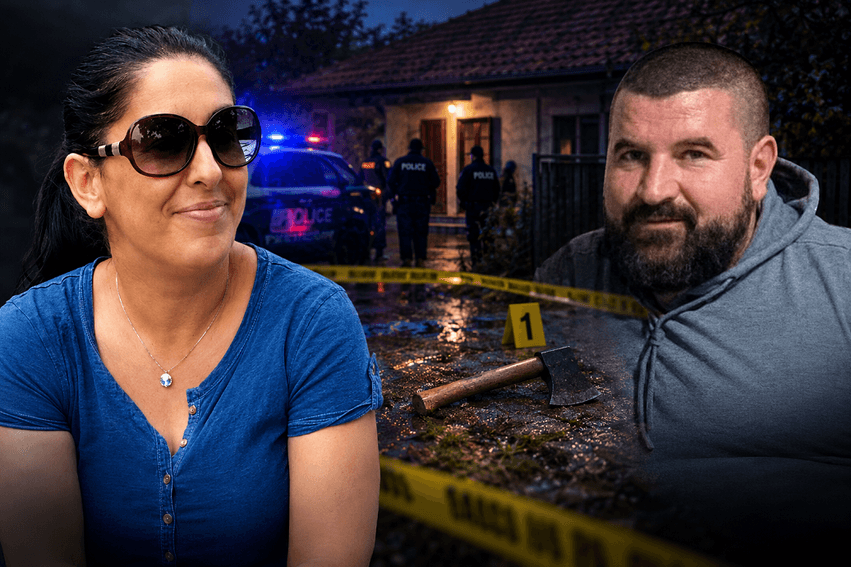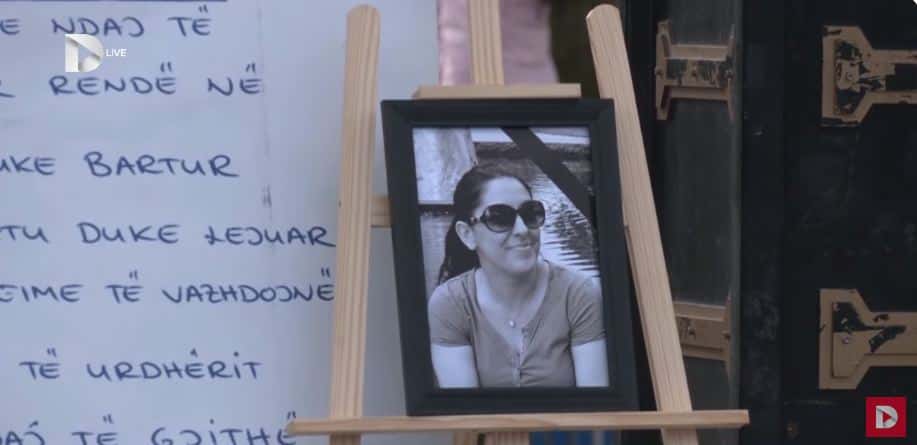
Details of the joint report compiled by the Kosovo Ministry of Justice and the Ministry of Internal Affairs concerning the murder of Arlinda Zeqaj, who was killed on October 25th 2026 in Vitomirica in Pec, just minutes after being accompanied home by Kosovo police.
The Official Documentation It Provided Euronews Albania highlights serious shortcomings, delays, and concessions of security and justice institutions that had clear warnings on the table about the victim’s life.

The document analyses the actions and inactions of responsible institutions, including the Kosovo Police, the Centre for Social Work in Pec and the institutions of justice, to assess whether legal obligations for protection of the victim have been met.
According to the report, Arlinda Zekiaj had experienced more than 12 years of physical and psychological violence by her husband, whom she married in 2010. She had returned to Kosovo in 2024 with her son, while her husband continued to stay mainly in the United States.
One of the most disturbing elements of the document is related to reporting violence to the police and the fact that, despite the authorities’ information that the husband owned weapons with permission, the reviewed documentation does not result in police taking action for its selection.
The report also cites an episode of violence in December 2025, when her husband, while in America, had threatened and offended Arlinda, asking her to leave home.
According to the victim’s statements, he had later returned to the apartment and set fire to her personal items. This episode was also recorded through a video that the woman had handed over to the police as a material test.
Despite the charges, her security problems had followed. The Foundation Court in Pec had issued a defense order through which the husband was forced to enable Arlinda to return and exploit the common home. Also, a distance was set for him to guard from it – two feet [2 m] inside and 20 feet [20 m] outside.
However, the report states that the woman had reported repeatedly, even twice a day, that she could not get into her home despite the judicial decision. She had also expressed constant security concerns, seeking to reassess the level of danger and to increase protection measures.
The document also states that institutions had addressed cases related to child care and that, following procedures, the Court had decided that the child would be entrusted to the mother.
One day after the incident, on October 26, the Court had accepted the prosecution’s request for an autopsy. The report suggests that the Institute for Legal Medicine had conducted relevant procedures and that the autopsy report would be forwarded to the prosecutor of the case after legal action was completed.
Source Layer: Dukeagini