Kosovo continues to be mired in some of the key reforms it must bring closer to the European Union.
The judiciary has not marked any progress, fighting corruption has yielded limited results, while political crises have weakened the functioning of institutions.

This is the picture presented by the European Commission in its report on Kosovo for 2026, where it warns that political and economic impacts on the justice system remain a serious obstacle to its independence and, in some respects, have even intensified.
The report provides a decline in the number of final decisions and penalties for high-level corruption, as well as shortcomings in parliamentary supervision of the Government.
However, not all estimates are negative.
The Commission notes progress in public administration, expanding digital services and extending the situation in northern Kosovo, which enabled the removal of EU punitive measures.
The document, titled Kosovo report 2026%, is part of the European Union’s Enlargement Package.
It covers the period from September 1st 2025 to September 1, 2026, but also includes some subsequent developments.
Rating comes ten years after Stabilisation Agreement entry into force – Association and nearly four years after Kosovo applied for EU membership.
Free Europe Radio requested comment by Kosovo’s chief negotiator with the EU, Jeton Zulfaj, regarding the findings of the European Commission report, and is awaiting its response.
Politics Prevents Reforms
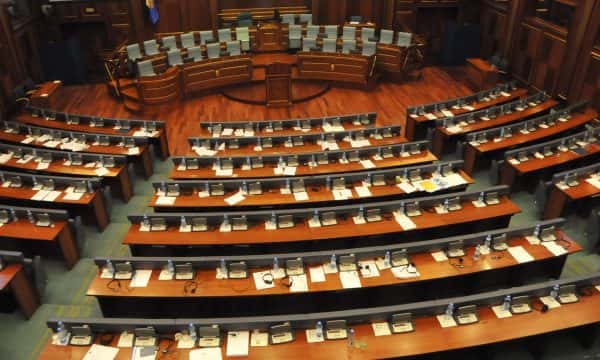
Two early parliamentary elections, long blockade periods and a government with limited competency for most of the reporting period have left traces on the functioning of institutions.
According to the Commission, the Assembly has exercised its competencies with considerable shortcomings, while monitoring the executive has been very limited.
The elections were generally praised as peaceful and competitive, but the report identifies efforts to politicise the Central Election Commission, shortcomings in overhauling campaigns and insufficient treatment of deinformation.
Another indication of the impact of political crises was the decline in voter turnout, from 45 percent in December 2025 to 37 percent in June 2026.
The commission estimates it suggests growing voter fatigue and dissatisfaction with the frequency of the elections.
Justice – One of the Worst Points
For the functioning of the judiciary, the assessment of the Commission is clear: generally, no progress has been noted.
Unsuitable influences from political, economic and other factors continue to undermine the independence and impartiality of the system, while the law package for reforming justice remains unapproval.
The Commission also raises concerns about implementing amendments to the Law to the Prosecutorial Council and requires respect for the Venice Commission’s recommendations.
However, it demonstrates positive developments in the process of selecting the chief state prosecutor and changes in the composition of the Prosecutorial Council.
Another concern is insufficient representation of Kosovo Serbs in the judiciary, which, according to the report, violates the multiethnic character of the justice system.
Special attention is also given to changes in the Specialized Chambers Law approved by the Parliament on 6 October.
The Commission warns that they raise serious concerns about meeting Kosovo’s international obligations, independence of the judiciary, protection of victims and witnesses, as well as ensuring responsibility for war crimes.
It also raises concerns about the constitutionality of the changes, which the president returned to the Assembly for review on October 22nd.
More Corruption Reports, Less High – Level Punishments
In the fight against corruption, the European Commission estimates Kosovo has marked limited progress.
While the number of final judicial decisions and penalties in cases of corruption not high-level corruption has increased significantly, in high-level cases there has been a decline.
The report stresses that Kosovo continues to have no comprehensive anti-corruption strategy and a coordinated approach to its fight.
Meanwhile, the number of signals received by the Agency for Prevention of Corruption has almost doubled compared to the previous year.
The Commission also calls for improving the verification of property statements and strengthening investigations into high-level corruption cases.
Free Media, but With Challenges
Limited progress is also noted in freedom of speech and of the media.
The commission estimates that Kosovo continues to have a pluralistic media environment, but provides problems with transparency of ownership and financial sustainability of the media.
Dialogue with Serbia: Little progress, many unmet obligations
Kosovo and Serbia have not made sufficient progress in implementing the 2023 Ohrid Agreement, while unilateral actions and rhetoric of both sides continue to hinder normalisation of relations, the European Commission estimates.
According to the report, dialogue has continued with regular meetings at the level of top negotiators and technical teams, but implementation of remaining obligations by dialogue agreements remains limited.
The commission urges Kosovo to launch the process for establishing self-advancing arrangements for the Serb community, while Serbia, in parallel, begins recognising Kosovo documents, symbols and institutions.
The report stresses that the Ohrid Agreement is legally binding for both sides and must be implemented without delay or preconditions.
The situation in Kosovo’s north is estimated calm, but fragile.
The commission criticises Kosovo authorities’ repeated actions towards Serbia-backed structures and services, the arrests of Kosovo Serbs and the refusal to withdraw the resignations of Serbian judges and prosecutors, which have hampered their reintegration into the justice system.
On the other hand, the Commission criticises Serbia for lobby against Kosovo membership in international organisations, including the Council of Europe and Interpol, as well as for its officials’ promotional rhetoric.
The report also stresses that Serbia has not taken significant steps to ensure responsibility for the armed attack on Kosovo Police in Banjska in September 2023.
The Commission warns that normalising relations and implementing dialogue agreements remain essential conditions for the European path of the two countries, which risk losing significant opportunities in the absence of progress. / REL
Source Layer: Insander